Grape producers, distributors and buyers meet for Sonora Spring Summit
Grape producers, distributors and buyers meet for Sonora Spring Summit
As a kickoff to this year's Sonora grape season, growers, shippers, distributors, retailers, foodservice buyers and others involved in the production and marketing of Mexican table grapes gathered in Hermosillo, Sonora, Mexico, in the heart of one of the state's major grape-growing areas, for the industry's second annual Sonora Spring Summit. The event is hosted by the Asociacion Agricola Local de Productores Uva de Mesa, the local association of table grape growers in Sonora, commonly known by its Spanish acronym AALPUM.
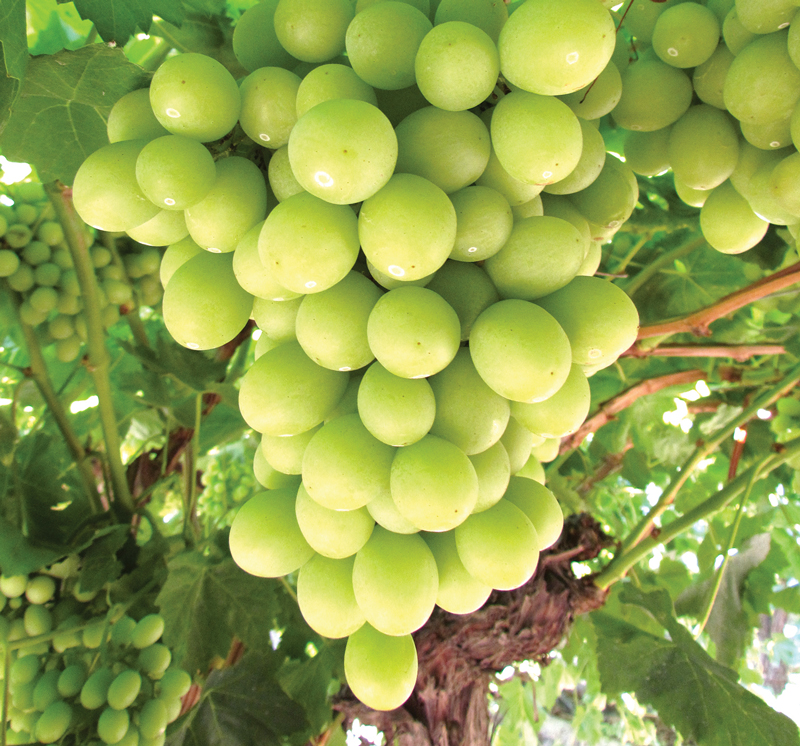
Nearly 16 million boxes of fresh table grapes were grown in the state of Sonora, Mexico, in 2007, most of which were exported to the United States last spring. A slightly larger crop is expected in 2008, with the harvest beginning around the first of May and continuing into July.
John Pandol, an executive with Pandol Bros. in Delano, CA, and chairman of the Sonora Grape Division of the Fresh Produce Association of the Americas, who was involved with the event, gave his perspective on the summit in an April 23 interview with The Produce News.
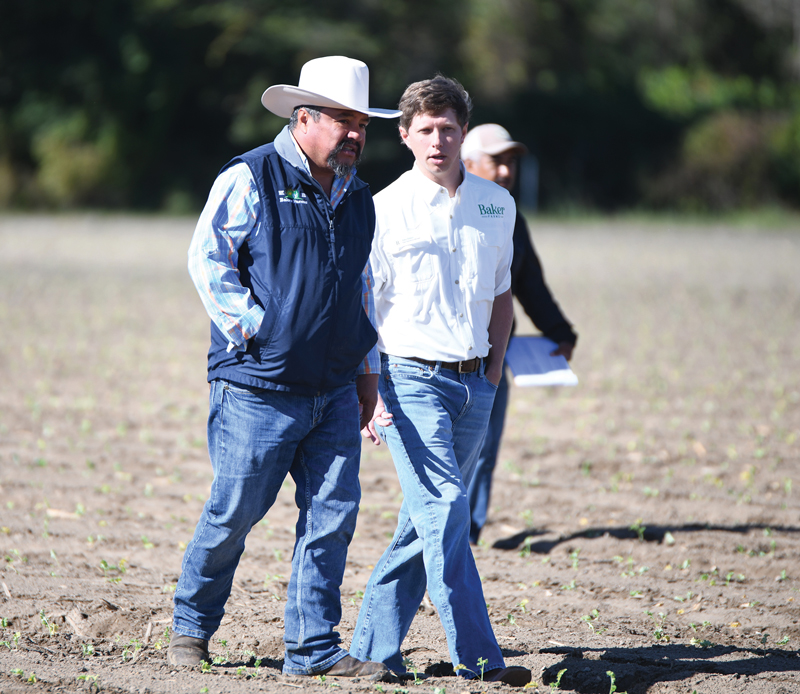
The event began Thursday evening, April 17, with a dinner followed on Friday morning by a field tour in which participants had the opportunity to visit grape vineyards and assess the progress of the crop.
The meeting portion began with introductions by Juan Alberto Laborin, director of AALPUM; association President Gilberto (Tito) Salazar; and Alejandro Elias Calles, secretary of agriculture for the state of Sonora, who formally inaugurated the proceedings, Mr. Pandol said.
After giving "a few focusing remarks," Mr. Pandol introduced a retail panel that was, for the second year in a row, "the most popular of the events" at the summit, he said. Panelists were Melissa Hooper, consumer affairs director for Stater Bros., a Southern California supermarket chain; Brian Sekenske, a buyer for Supervalu; Mike Hansen, director of produce for Sysco in Salinas, CA; and Victor Murillo, a quality-assurance specialist for Sysco. Mr. Pandol moderated the panel.
Each panelist presented prepared remarks and fielded questions relating to the marketing of grapes and the expectations of U.S. buyers.
"Here you have a buyer from Supervalu which, between their retail and wholesale operations, probably touches 20 percent of the supermarkets in the nation. And Sysco said they deliver product to 400,000 points of delivery," Mr. Pandol said. One of the key points that came out of the discussion was that "they have really full confidence in the Mexican produce industry."
One of the main topics of discussion on which the panelists focused dealt with the pros and cons of coming to market early. The key question was whether the retailers wanted to be the first to have grapes from Mexico or whether they wanted to "wait a certain amount of time until product is more economical or more mature or has better color," Mr. Pandol said. "The panelists essentially said they would rather have no sale than a bad sale. Being first in the market at all costs is not a good strategy," and they would prefer to put the grapes in their stores when they are ready to deliver consumer satisfaction.
There is sometimes the attitude that "a product must be on the shelf every day," he said, but "there are times when it shouldn't be," as during the transition from one growing region to another when the grapes from the new region are not quite ready. In that situation, "not stocking is an option."
The four retail panelists all recognized that by being "the first to market," sometimes "both the store and the industry does itself more damage than good," he said.
The next speaker, Mr. D'Amico, a buyer for Provincial Fruit Co. Ltd. in Toronto, made the same point, noting that when grapes come in that are not ready yet, customers "just get off grapes for a while. It really slows down demand," Mr. Pandol said of Mr. D'Amico's remarks.
Other speakers were William Nganje, a professor of agricultural economics at Arizona State University; Lizeth Quintero, director general of Mexico Supreme Quality; Tracy Encinas, head of cargo for the Nogales port of entry; and Armando Goncalvez, field manager for Customs & Border Protection at the Nogales port of entry.
Messrs. Pandol and Laborin then presented crop estimates. According to Mr. Pandol, the Perlette crop is estimated at 3.1 million boxes with a start date of May 2, peaking on May 15. Flames are estimated at 7.7 million boxes with a May 11 start date, peaking on May 21. Sugraones are estimated at 4.9 million with a May 21 start date, peaking on June 7. Red Globes are estimated at 900,000 boxes and black seedless at 600,000 boxes, both with a May 31 start date and both peaking on June 22.
Nearly 16 million boxes of fresh table grapes were grown in the state of Sonora, Mexico, in 2007, most of which were exported to the United States last spring. A slightly larger crop is expected in 2008, with the harvest beginning around the first of May and continuing into July.
John Pandol, an executive with Pandol Bros. in Delano, CA, and chairman of the Sonora Grape Division of the Fresh Produce Association of the Americas, who was involved with the event, gave his perspective on the summit in an April 23 interview with The Produce News.
The event began Thursday evening, April 17, with a dinner followed on Friday morning by a field tour in which participants had the opportunity to visit grape vineyards and assess the progress of the crop.
The meeting portion began with introductions by Juan Alberto Laborin, director of AALPUM; association President Gilberto (Tito) Salazar; and Alejandro Elias Calles, secretary of agriculture for the state of Sonora, who formally inaugurated the proceedings, Mr. Pandol said.
After giving "a few focusing remarks," Mr. Pandol introduced a retail panel that was, for the second year in a row, "the most popular of the events" at the summit, he said. Panelists were Melissa Hooper, consumer affairs director for Stater Bros., a Southern California supermarket chain; Brian Sekenske, a buyer for Supervalu; Mike Hansen, director of produce for Sysco in Salinas, CA; and Victor Murillo, a quality-assurance specialist for Sysco. Mr. Pandol moderated the panel.
Each panelist presented prepared remarks and fielded questions relating to the marketing of grapes and the expectations of U.S. buyers.
"Here you have a buyer from Supervalu which, between their retail and wholesale operations, probably touches 20 percent of the supermarkets in the nation. And Sysco said they deliver product to 400,000 points of delivery," Mr. Pandol said. One of the key points that came out of the discussion was that "they have really full confidence in the Mexican produce industry."
One of the main topics of discussion on which the panelists focused dealt with the pros and cons of coming to market early. The key question was whether the retailers wanted to be the first to have grapes from Mexico or whether they wanted to "wait a certain amount of time until product is more economical or more mature or has better color," Mr. Pandol said. "The panelists essentially said they would rather have no sale than a bad sale. Being first in the market at all costs is not a good strategy," and they would prefer to put the grapes in their stores when they are ready to deliver consumer satisfaction.
There is sometimes the attitude that "a product must be on the shelf every day," he said, but "there are times when it shouldn't be," as during the transition from one growing region to another when the grapes from the new region are not quite ready. In that situation, "not stocking is an option."
The four retail panelists all recognized that by being "the first to market," sometimes "both the store and the industry does itself more damage than good," he said.
The next speaker, Mr. D'Amico, a buyer for Provincial Fruit Co. Ltd. in Toronto, made the same point, noting that when grapes come in that are not ready yet, customers "just get off grapes for a while. It really slows down demand," Mr. Pandol said of Mr. D'Amico's remarks.
Other speakers were William Nganje, a professor of agricultural economics at Arizona State University; Lizeth Quintero, director general of Mexico Supreme Quality; Tracy Encinas, head of cargo for the Nogales port of entry; and Armando Goncalvez, field manager for Customs & Border Protection at the Nogales port of entry.
Messrs. Pandol and Laborin then presented crop estimates. According to Mr. Pandol, the Perlette crop is estimated at 3.1 million boxes with a start date of May 2, peaking on May 15. Flames are estimated at 7.7 million boxes with a May 11 start date, peaking on May 21. Sugraones are estimated at 4.9 million with a May 21 start date, peaking on June 7. Red Globes are estimated at 900,000 boxes and black seedless at 600,000 boxes, both with a May 31 start date and both peaking on June 22.