South African citrus industry serious about developing U.S. market
South African citrus industry serious about developing U.S. market
GLOUCESTER CITY, NJ -- The South African citrus industry has invested heavily to meet the special requirements and demands of serving the U.S. market. Details of those efforts were outlined to The Produce News Feb. 11 in the Gloucester City offices of one of South Africa's citrus importers, Fisher Capespan U.S.A. LLC, by two key leaders of the Western Cape Citrus Producers Forum, headquartered in Citrusdal, South Africa.
Piet Smit, the Western Cape forum's managing director, and Gerrit van der Merwe, chairman of the forum, described the measures the South African industry is applying to satisfy the U.S. market and also announced that their industry will be promoting South African citrus in the United States for the first time this spring. The details of those plans are being finalized.
Messrs. Smit and van der Merwe are both citrus growers; the former is director of Cedarpack in Citrusdal, which is about a two-hour drive from Cape Town, while the latter is chairman of the ALG Farming Group and director of Cedar Citrus, also based in Citrusdal.
Most growers in the Citrusdal Valley are prepared to export to the United States, according to Mr. Smit. This includes adherence to spray programs, meeting phytosanitary standards and other U.S. Department of Agriculture regulations.
Mr. van der Merwe said that South African citrus growers and their national government have recently invested millions of dollars in a moth-sterilization facility to control the false codling moth, which is the key phytosanitary concern for USDA regulators regarding South African citrus exports.
Mr. Smit added that seven years ago, South Africa launched a research program -- designed to minimize chemicals in an environmentally friendly effort -- to greatly reduce the false codling moth population by sterilizing large numbers of the insect. After successful tests, the citrus industry built a commercial "insectory" to produce false codling moths to be sterilized before release.
Sterilized moths released into selected areas produce an "F-1" generation, which is sterile and which decimates future generations of the wild moth population. "Scientists say you can't claim an area is FCM-free. But if you can't find any, they're not there," Mr. Smit said.
The program is being conducted in close cooperation with the USDA, and USDA inspectors based in Cape Town "are very thorough," Mr. van der Merwe stated.
Last year, the sterilization program was used on about 3,750 acres of South African citrus groves. This year, the program will be expanded to 9,000 acres.
"The final stage will be next year, when sterile moths are released over 14,000 acres, which is the whole major production area" of citrus bound for the United States. This region, Mr. Smit continued, is the Citrusdal Valley, which runs between the towns of Citrusdal and Clanwilliam. The insectory was funded by producers and the South African government. Because the facility is the world's first of this kind, the equipment had to be built and designed exclusively for this use.
Mr. Smit said that there is strict controls to prevent exporting citrus carrying the False Codling Moth to the United States. A grower whose fruit is found to have the moth twice in a season is not allowed to export again that season. That grower is then under great scrutiny the following season.
Mr. Smit continued, "We understand the necessity to protect the industry on this side [of the Atlantic Ocean]." One of the responsibilities of the Western Cape Citrus Producers Forum is to assure that growers are complying with USDA regulations.
In another investment to accommodate USDA regulations, the industry funds a preclearance program in South Africa. "When there is a rejection on this side, all the costs are already in the fruit, then we have to re-export," said Mr. Smit.
With these programs and skyrocketing transportation costs, there is a large expense in serving the U.S. market. Still, Mr. Smit said that the United States is "a lucrative market," which, when satisfied, suits South Africa's goal of getting out of the commodity business by shipping a premium product. "Summer citrus is still not a commodity business."
Mr. van der Merwe said that in 2000, "South Africa really started in America" with citrus sales. Prior to that, his industry had studied the success of Australia's development of a Navel industry in the United States. The South Africans, of course, also studied the California summer citrus business. To compete in the United States, South Africa packs "a higher quality than we normally export."
Mr. Smit said that shipping anything less than quality to the U.S. market "means you're dead." U.S. consumers will pay for quality, "but the margin of error is zero."
Meeting U.S. protocols and standards costs grower-packers an additional 25 percent, Mr. van der Merwe said. This includes a lower packout percentage. "It is nice to sell a good product that people don't moan about," he added.
Mr. Smit said that foreign currency exchange rates are another cost of exporting. But those costs are unpredictable and variable, and thus are not an issue that exporters give much consideration. "It is part of our life. It's an unknown, like nature. It's a risk we can't manage, so we manage what we can."
Mr. van der Merwe said that South African growers are trying to avoid typical U.S. retail per-piece pricing through a move toward bagging. This operation is being done with repackers in the Philadelphia area. He noted that five- pound clementine boxes "are very expensive, especially when the local fruit (such as California stone fruit) is inexpensive." Packs of two or three pounds of South African citrus can drop the consumer's price point to $2 or $3 vs. as much as $7 for a five-pound box.
Mr. van der Merwe said that the bunker fuel price -- oil for cargo ships -- is expected to rise 42 percent this season over a year ago. In 2007, this oil was 28 percent higher than in 2006. South African exporters are still awaiting exact freight costs for the 2008 shipping season. The exporters will be chartering ships to have a direct connection to the U.S. market.
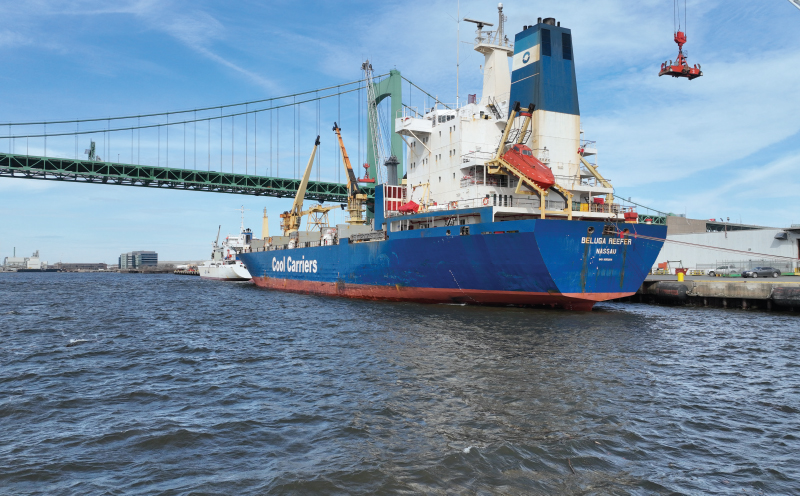
Early plans call for most of the break-bulk charter ships to take South African citrus to the Gloucester Marine Terminal in Gloucester City, NJ, Mr. Smit said. Container ships bearing this citrus are to call on Philadelphia's Packer Avenue Terminal, which is immediately across the Delaware River from Gloucester City.
Piet Smit, the Western Cape forum's managing director, and Gerrit van der Merwe, chairman of the forum, described the measures the South African industry is applying to satisfy the U.S. market and also announced that their industry will be promoting South African citrus in the United States for the first time this spring. The details of those plans are being finalized.
Messrs. Smit and van der Merwe are both citrus growers; the former is director of Cedarpack in Citrusdal, which is about a two-hour drive from Cape Town, while the latter is chairman of the ALG Farming Group and director of Cedar Citrus, also based in Citrusdal.
Most growers in the Citrusdal Valley are prepared to export to the United States, according to Mr. Smit. This includes adherence to spray programs, meeting phytosanitary standards and other U.S. Department of Agriculture regulations.
Mr. van der Merwe said that South African citrus growers and their national government have recently invested millions of dollars in a moth-sterilization facility to control the false codling moth, which is the key phytosanitary concern for USDA regulators regarding South African citrus exports.
Mr. Smit added that seven years ago, South Africa launched a research program -- designed to minimize chemicals in an environmentally friendly effort -- to greatly reduce the false codling moth population by sterilizing large numbers of the insect. After successful tests, the citrus industry built a commercial "insectory" to produce false codling moths to be sterilized before release.
Sterilized moths released into selected areas produce an "F-1" generation, which is sterile and which decimates future generations of the wild moth population. "Scientists say you can't claim an area is FCM-free. But if you can't find any, they're not there," Mr. Smit said.
The program is being conducted in close cooperation with the USDA, and USDA inspectors based in Cape Town "are very thorough," Mr. van der Merwe stated.
Last year, the sterilization program was used on about 3,750 acres of South African citrus groves. This year, the program will be expanded to 9,000 acres.
"The final stage will be next year, when sterile moths are released over 14,000 acres, which is the whole major production area" of citrus bound for the United States. This region, Mr. Smit continued, is the Citrusdal Valley, which runs between the towns of Citrusdal and Clanwilliam. The insectory was funded by producers and the South African government. Because the facility is the world's first of this kind, the equipment had to be built and designed exclusively for this use.
Mr. Smit said that there is strict controls to prevent exporting citrus carrying the False Codling Moth to the United States. A grower whose fruit is found to have the moth twice in a season is not allowed to export again that season. That grower is then under great scrutiny the following season.
Mr. Smit continued, "We understand the necessity to protect the industry on this side [of the Atlantic Ocean]." One of the responsibilities of the Western Cape Citrus Producers Forum is to assure that growers are complying with USDA regulations.
In another investment to accommodate USDA regulations, the industry funds a preclearance program in South Africa. "When there is a rejection on this side, all the costs are already in the fruit, then we have to re-export," said Mr. Smit.
With these programs and skyrocketing transportation costs, there is a large expense in serving the U.S. market. Still, Mr. Smit said that the United States is "a lucrative market," which, when satisfied, suits South Africa's goal of getting out of the commodity business by shipping a premium product. "Summer citrus is still not a commodity business."
Mr. van der Merwe said that in 2000, "South Africa really started in America" with citrus sales. Prior to that, his industry had studied the success of Australia's development of a Navel industry in the United States. The South Africans, of course, also studied the California summer citrus business. To compete in the United States, South Africa packs "a higher quality than we normally export."
Mr. Smit said that shipping anything less than quality to the U.S. market "means you're dead." U.S. consumers will pay for quality, "but the margin of error is zero."
Meeting U.S. protocols and standards costs grower-packers an additional 25 percent, Mr. van der Merwe said. This includes a lower packout percentage. "It is nice to sell a good product that people don't moan about," he added.
Mr. Smit said that foreign currency exchange rates are another cost of exporting. But those costs are unpredictable and variable, and thus are not an issue that exporters give much consideration. "It is part of our life. It's an unknown, like nature. It's a risk we can't manage, so we manage what we can."
Mr. van der Merwe said that South African growers are trying to avoid typical U.S. retail per-piece pricing through a move toward bagging. This operation is being done with repackers in the Philadelphia area. He noted that five- pound clementine boxes "are very expensive, especially when the local fruit (such as California stone fruit) is inexpensive." Packs of two or three pounds of South African citrus can drop the consumer's price point to $2 or $3 vs. as much as $7 for a five-pound box.
Mr. van der Merwe said that the bunker fuel price -- oil for cargo ships -- is expected to rise 42 percent this season over a year ago. In 2007, this oil was 28 percent higher than in 2006. South African exporters are still awaiting exact freight costs for the 2008 shipping season. The exporters will be chartering ships to have a direct connection to the U.S. market.
Early plans call for most of the break-bulk charter ships to take South African citrus to the Gloucester Marine Terminal in Gloucester City, NJ, Mr. Smit said. Container ships bearing this citrus are to call on Philadelphia's Packer Avenue Terminal, which is immediately across the Delaware River from Gloucester City.