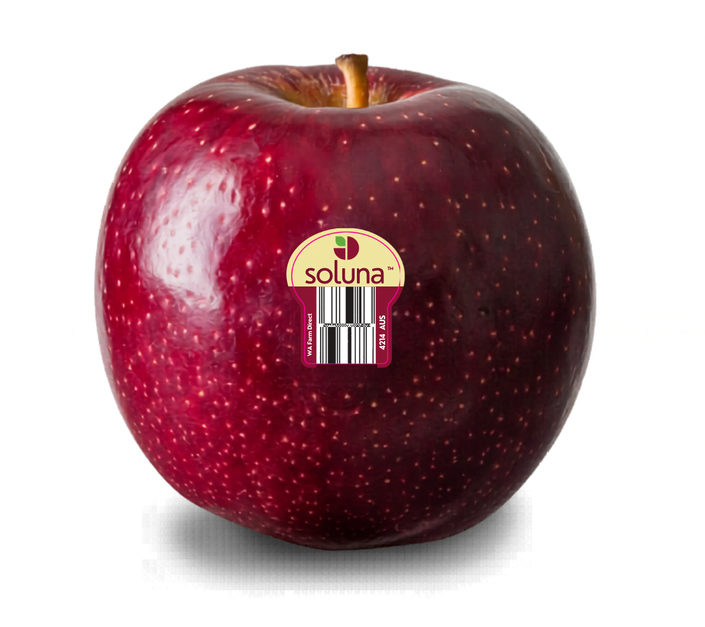
Fewer U.S. apples forecast for 2007
Fewer U.S. apples forecast for 2007
CHICAGO -- While a few states will produce more apples in the 2007 harvest than in the previous year, the vast majority will produce fewer apples, and the 2007 national U.S. apple crop could be down as much as 10 percent from the previous year, according to estimates released by the U.S. Apple Association.
"By historical standards, the 2007 U.S. apple crop is a light crop," USApple Vice President James R. Cranney Jr. told those attending the association's Apple Crop Outlook & Marketing Conference, held Aug. 23-24 at the Four Seasons Hotel, here.
He cited a spring frost in parts of the Southeast, mid-Atlantic and Midwest as one reason for the expected shorter crop, as well as very dry conditions in some other areas, such as parts of Michigan and the Appalachia region.
In a nutshell, the 2007 apple crop will be smaller than the previous year, and will have minimal carryover, excellent varietal distribution, good export demand and quality improvements, according to Mr. Cranney, who joined the association in 1993, overseeing its industry information and public affairs activities as well as the compilation and dissemination of monthly crop storage and movement information.
The 2006 crop, at 236.5 million bushels (fresh and processed), was the 12th largest apple crop since the U.S. Department of Agriculture has recorded statistics on commercial apple production. The record crop of 277.3 million bushels was produced in 1988.
The USDA has estimated that the 2007 crop will come in at 221.1 million bushels, which would rank it as the 18th largest crop produced by U.S. growers. At its meeting here, USApple is forecasting a national crop of 212.5 million bushels, which would put it down 10 percent from last year.
The East is forecast by USApple to produce 53.8 million bushels of apples in 2007, which would represent a 7 percent drop from last year and virtually unchanged from the five-year average. The Midwest is forecast to produce 24.7 million bushels in 2007, which would represent a 15 percent drop from last year and 5 percent below the five-year average. The West is forecast to produce 133.9 million bushels in 2007, which would represent a 10 percent drop from last year and 8 percent below the five-year average.
For the United States, USApple is forecasting a total crop of about 212.5 million bushels, which would represent a 10 percent drop from last year and 6 percent under the five-year average.
Breaking these numbers down a bit more, Washington state continues to lead all states by a huge margin. USApple is estimating that Washington will produce 120 million bushels in 2007, which would be 11 percent less than last year and 7 percent less than the five-year average.
The estimate for the No. 2 state, New York, is 29.5 million bushels in 2007, which would be down 1 percent from 2006 but 16 percent higher than the five-year average.
For No. 3 Michigan, USApple is estimating a crop of 20 million bushels, which would be down 1 percent from 2006 but 12 percent higher than the five-year average.
Coming in fourth is Pennsylvania, which USApple is estimating will produce 10.8 million bushels in 2007, which would be down 3 percent from last year but 4 percent higher than the five-year average.
In fifth place is California, which USApple is estimating will produce 8 million bushels in 2007, which would be down 5 percent from last year and down 15 percent from the five-year average.
Concerning crop movement, 43 percent of the 2006 crop was moved prior to Dec. 1, 2006, with 37.3 million bushels being processed and 50.4 million bushels used in the domestic fresh market during this period, according to USApple figures.
Exports of U.S. apples from the 2006 crop decreased to 31.1 million bushels, from 36.1 million bushels in 2005. The decrease resulted mainly from lower volumes of exports to Mexico, Taiwan and Malaysia. The top three destinations for U.S. apples were Mexico with 23 percent, Canada with 20 percent and Taiwan with 7 percent.
Fresh-market apple imports increased to about 8.9 million 42-pound cartons in 2006, from 8.4 million cartons in 2005. Chile was the largest source, accounting for 58 percent of total imports. New Zealand was second, with 22 percent, followed by Canada with 18 percent.
In 1981, the USDA discontinued its varietal estimate of the national apple crop. Since then, the U.S. Apple Association has provided that service. "The varietal picture has changed considerably over the past five years, and will continue to change with the 2007 crop," according to USApple.
Red Delicious still dominates varietal production nationally, while Gala holds second place for 2007, as it did for the first time in 2006. Golden Delicious, which ranked second for many years, dropped to third last year.
USApple estimates that total Red Delicious production in 2007 will fall to 53.7 million bushels, a 12 percent decrease from 2006. Gala production in 2007 is forecast at 28.5 million bushels, which is down 1 percent from 2006.
In other varieties, Golden Delicious is forecast at 24.6 million bushels in 2007, down from 28.3 million in 2006. Granny Smith is forecast at 23 million bushels in 2007, down from 22.3 million in 2006. Fuji is forecast at 18.2 million bushels in 2007, down from 20.2 million in 2006. McIntosh is forecast at 10.1 million bushels in 2007, statistically unchanged from 2006.
Two awards were announced at the general session Thursday, Aug. 23.
First, Brian Sparks of American Fruit Grower magazine presented the 2007 Apple Grower of the Year Award to Jeffrey Crist of Crist Bros. Orchards Inc. in Walden, NY.
Jim Allen, president of the New York Apple Association, called Mr. Crist "a forward thinker," and Mr. Crist's daughter, Jenny, spoke of her father's "ability to work with others," his sense of humor and his "team spirit."
In accepting the award, Mr. Crist, who is also a trustee of the U.S. Apple Association, called it "amazing to still grow apples 65 miles from New York City," adding about apples generally, "I think we have an exciting product."
In the second presentation, Bill Dodd of Fruit Growers Marketing Association announced that Publix in Lakeland, FL, was National Apple Month's 2007 Merchandiser of the Year.
"By historical standards, the 2007 U.S. apple crop is a light crop," USApple Vice President James R. Cranney Jr. told those attending the association's Apple Crop Outlook & Marketing Conference, held Aug. 23-24 at the Four Seasons Hotel, here.
He cited a spring frost in parts of the Southeast, mid-Atlantic and Midwest as one reason for the expected shorter crop, as well as very dry conditions in some other areas, such as parts of Michigan and the Appalachia region.
In a nutshell, the 2007 apple crop will be smaller than the previous year, and will have minimal carryover, excellent varietal distribution, good export demand and quality improvements, according to Mr. Cranney, who joined the association in 1993, overseeing its industry information and public affairs activities as well as the compilation and dissemination of monthly crop storage and movement information.
The 2006 crop, at 236.5 million bushels (fresh and processed), was the 12th largest apple crop since the U.S. Department of Agriculture has recorded statistics on commercial apple production. The record crop of 277.3 million bushels was produced in 1988.
The USDA has estimated that the 2007 crop will come in at 221.1 million bushels, which would rank it as the 18th largest crop produced by U.S. growers. At its meeting here, USApple is forecasting a national crop of 212.5 million bushels, which would put it down 10 percent from last year.
The East is forecast by USApple to produce 53.8 million bushels of apples in 2007, which would represent a 7 percent drop from last year and virtually unchanged from the five-year average. The Midwest is forecast to produce 24.7 million bushels in 2007, which would represent a 15 percent drop from last year and 5 percent below the five-year average. The West is forecast to produce 133.9 million bushels in 2007, which would represent a 10 percent drop from last year and 8 percent below the five-year average.
For the United States, USApple is forecasting a total crop of about 212.5 million bushels, which would represent a 10 percent drop from last year and 6 percent under the five-year average.
Breaking these numbers down a bit more, Washington state continues to lead all states by a huge margin. USApple is estimating that Washington will produce 120 million bushels in 2007, which would be 11 percent less than last year and 7 percent less than the five-year average.
The estimate for the No. 2 state, New York, is 29.5 million bushels in 2007, which would be down 1 percent from 2006 but 16 percent higher than the five-year average.
For No. 3 Michigan, USApple is estimating a crop of 20 million bushels, which would be down 1 percent from 2006 but 12 percent higher than the five-year average.
Coming in fourth is Pennsylvania, which USApple is estimating will produce 10.8 million bushels in 2007, which would be down 3 percent from last year but 4 percent higher than the five-year average.
In fifth place is California, which USApple is estimating will produce 8 million bushels in 2007, which would be down 5 percent from last year and down 15 percent from the five-year average.
Concerning crop movement, 43 percent of the 2006 crop was moved prior to Dec. 1, 2006, with 37.3 million bushels being processed and 50.4 million bushels used in the domestic fresh market during this period, according to USApple figures.
Exports of U.S. apples from the 2006 crop decreased to 31.1 million bushels, from 36.1 million bushels in 2005. The decrease resulted mainly from lower volumes of exports to Mexico, Taiwan and Malaysia. The top three destinations for U.S. apples were Mexico with 23 percent, Canada with 20 percent and Taiwan with 7 percent.
Fresh-market apple imports increased to about 8.9 million 42-pound cartons in 2006, from 8.4 million cartons in 2005. Chile was the largest source, accounting for 58 percent of total imports. New Zealand was second, with 22 percent, followed by Canada with 18 percent.
In 1981, the USDA discontinued its varietal estimate of the national apple crop. Since then, the U.S. Apple Association has provided that service. "The varietal picture has changed considerably over the past five years, and will continue to change with the 2007 crop," according to USApple.
Red Delicious still dominates varietal production nationally, while Gala holds second place for 2007, as it did for the first time in 2006. Golden Delicious, which ranked second for many years, dropped to third last year.
USApple estimates that total Red Delicious production in 2007 will fall to 53.7 million bushels, a 12 percent decrease from 2006. Gala production in 2007 is forecast at 28.5 million bushels, which is down 1 percent from 2006.
In other varieties, Golden Delicious is forecast at 24.6 million bushels in 2007, down from 28.3 million in 2006. Granny Smith is forecast at 23 million bushels in 2007, down from 22.3 million in 2006. Fuji is forecast at 18.2 million bushels in 2007, down from 20.2 million in 2006. McIntosh is forecast at 10.1 million bushels in 2007, statistically unchanged from 2006.
Two awards were announced at the general session Thursday, Aug. 23.
First, Brian Sparks of American Fruit Grower magazine presented the 2007 Apple Grower of the Year Award to Jeffrey Crist of Crist Bros. Orchards Inc. in Walden, NY.
Jim Allen, president of the New York Apple Association, called Mr. Crist "a forward thinker," and Mr. Crist's daughter, Jenny, spoke of her father's "ability to work with others," his sense of humor and his "team spirit."
In accepting the award, Mr. Crist, who is also a trustee of the U.S. Apple Association, called it "amazing to still grow apples 65 miles from New York City," adding about apples generally, "I think we have an exciting product."
In the second presentation, Bill Dodd of Fruit Growers Marketing Association announced that Publix in Lakeland, FL, was National Apple Month's 2007 Merchandiser of the Year.