Calavo’s California avocado crop on the rise
Calavo’s California avocado crop on the rise
Because of a heavy set on the trees, as well as some grower gains, Calavo Growers Inc., based in Santa Paula, CA, is expecting to ship about 50 percent more California avocados this year than the company did in 2015.
Rob Wedin, vice president of fresh sales and marketing, said the Ventura County district, where it is headquartered and has a strong presence, has a particularly heavy crop this season. And, speaking on March 7 after a couple of inches of rain had fallen the previous couple of days, he said that precipitation should result in a surge in growth in fruit size in the short term and even better quality for later fruit as the season wears on.
Calavo began shipping some California fruit in January, with light shipments also marking February. Wedin said volume would slowly increase in March, “and then we are going to hit it hard in April with shipments continuing through Labor Day,” he added.
 Rob WedinThough supplies will be much lighter in September, Calavo is anticipating having California fruit that month as this year’s much larger crop will be stretched out through the summer months. As spring heats up and California’s crop gains volume, Calavo will send much of its Mexican production to the East Coast and keep most of the California fruit closer to home.
Helping in that effort is the recent opening of the company’s third value-added distribution center. The opening up of a facility in Jacksonville, FL, several months ago gives the organization a strategic advantage for shipping to the Southeast, just as its Texas and New Jersey forward distribution facilities allow for the efficient servicing of customers in the Midwest and along the Eastern Seaboard, respectively.
Wedin said the facility has already paid dividends with regard to the increased shipments of the two main value-added products in Calavo’s lineup: ripe avocados and bagged avocados. Together, he said those value-added items account for more than 60 percent of the company’s shipments.
“Ripe fruit will continue to be increasingly popular,” he said. “Just as having ripe bananas available 12 months of the year grew the sales of bananas, having ripe avocados at retail for the consumer every single day does increase sales.”
In general, fruit is shipped to distribution centers and begins the ripening process which typically takes two to four days, depending upon the maturity of the fruit. The goal of many retailers is to have ripe fruit available for the consumer every day. When it is offered, research has shown that sales increase.
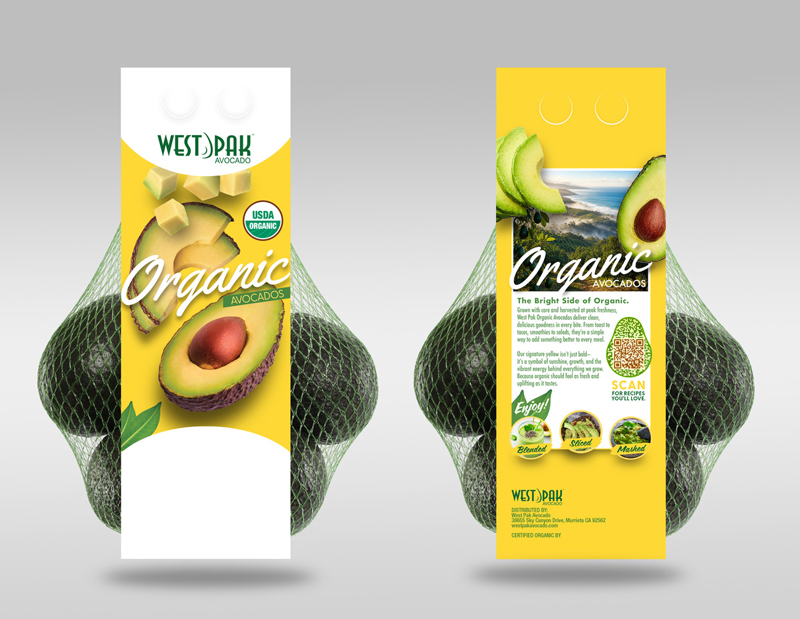
The advent of bagged fruit has also worked toward increasing consumption as consumers are buying four, five or six avocados in one shopping event as opposed to just a single avocado. Wedin said bagging is driving demand as it now represents more than 10 percent of Calavo’s sales and gaining market share each month. The bags typically hold two to four pounds of fruit with the count varying based on the size of the avocado and the marketing strategy of the retailer. Some retailers use the bags for small fruit with a discounted price. On the other hand, there are retailers that buy some of the largest fruit available and still want it bagged in an effort to drive multiple sales.
The Calavo executive also noted an uptick in the sales of organic avocados. “Our successful organic sales programs have grown substantially out of Mexico,” he said. But as the harvest moved to California, he noted: “We are in great position to support California growers with these same programs.”
Returning his attention to the just completed rainstorm with more storms forecast to hit the state over the next week, Wedin said avocados do very well once a good rainstorm hits the area and “cleans out the root structure of a grove.”
He explained that the rain gives an almost instantaneous growth spurt to the fruit getting ready for harvest, but also significantly improves the quality of less mature fruit that will be picked two, three, even four months later. Years of research has shown that trees perform much better on natural water as opposed to well water or that coming from other irrigation sources.