Chilean fruit trade bullish on health of its industry
Chilean fruit trade bullish on health of its industry
ATLANTA — The Chilean fruit industry has seen challenges in recent years ranging from untimely freezes to strikes at shipping ports to a less-than-favorable exchange rate with its trading partners, which have in one way or another hampered its important fresh fruit exports.
But this season officials are optimistic that the fresh fruit export season is shaping up to be a good one.
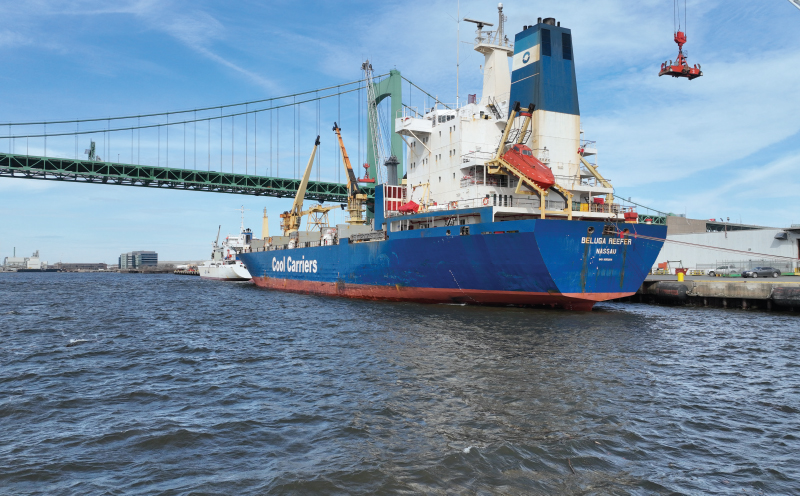
“We had some challenges that caused some problems,” Ron Bown, president of ASOEX, the Chilean fruit exporters association, told The Produce News at the recent Produce Marketing Association Fresh Summit convention, here. “Political problems resulted in strikes at the shipping ports, and that had an effect on our ability to ship fruit.”
Bown said worker unions have become more prominent in the last eight years, and disagreements between companies and labor have flared up during the years. But industry and unions recently forged an agreement and presented a proposal to the government.
“We are hoping the government will pass laws to address our specific needs, and I am optimistic that will happen by the end of this year,” he said. “It is important for us to have the ability to remain competitive in the shipping industry.”
Bown said that production is more diversified this year, but overall volume will be similar to last year.
“With competition greater than ever, we need to take close care about what we send to the world,” he said.
Chile’s citrus season is beginning to wind down now, according to Juan Ortuzar, chairman of the Chilean Citrus Committee, but the export season was a good one for its grower-members.
“We send 80 to 85 percent of our production to the United States, and it was a very good season,” he said. “We saw strong demand, especially on our easy-peelers, which have grown dramatically in popularity.”
Ortuzar said Chile provides a perfect complement to U.S. domestic production, since it is counter-seasonal to its Northern Hemisphere trading partner.
“People in the United States have come to rely on Chilean fruit during their offseason,” he said. “We supply early- and late-season easy-peelers from May through mid-November, Navels from June through October, and lemons from May through October.”
Ortuzar said that members of the committee handle approximately 75 percent of the Chilean citrus that is exported to the United States. “Members pay a basic assessment per ton to fund the committees promotional and research activities. As volume goes up, our activities increase.”
Karen Brux, managing director for North America of the Chilean Fresh Fruit Association, said, “There is more competition and more volume in the category than ever, but demand is still so high.”
Ortuzar added that it is important to work with retail customers and the promotion team to keep moving the volume.
“At this point, demand is strong and volume is strong, so the market is really doing quite well.”
As blueberry season approaches in Chile, Andres Armstrong, executive director of the Chilean Blueberry Committee, said the industry is catching up on growth following a big freeze in 2013, and that took some time to recover.
“We expect growth of between 4 [percent] and 15 percent over last season,” he said. “North America is by far our largest export market, with 67 percent of our product going to the United States and Canada. Second is Europe, with 23 percent, followed by Asia with 10 percent.”
He said the main goals of the committee are to work to reduce the risks of food-safety issues and open new markets.