Deardorff-Jackson changes name, focuses on organics and sustainability
Deardorff-Jackson changes name, focuses on organics and sustainability
Deardorff-Jackson Co. in Oxnard, CA, is now Deardorff Family Farms.
"The name change is about defining who we are and what we do," said Tom Deardorff II, the company's president. "My father, uncle, grandfather and great-grandfather earned a reputation for the Deardorff name that was based on hard work, honesty and integrity. We proudly carry the Deardorff name and will continue to honor their efforts with a commitment to ensuring environmental and community health."
That commitment is reflected in a new slogan announced by the company, "Sustainable farming for a healthier life," and in a focus on organic and pesticide-free produce to be shipped under the new "Deardorff Family Farms" label.
The new company name and slogan as well as the movement into the organic arena were announced in a recent company press release.
According to the release, "the new slogan is in place after years of organic farming research and development. New practices are now in operation that employ a much lighter impact on the environment and generate bountiful, great-tasting produce. Deardorff Family Farms is dedicated to reducing chemical use, improving water quality and conservation as well as promoting natural fertility."
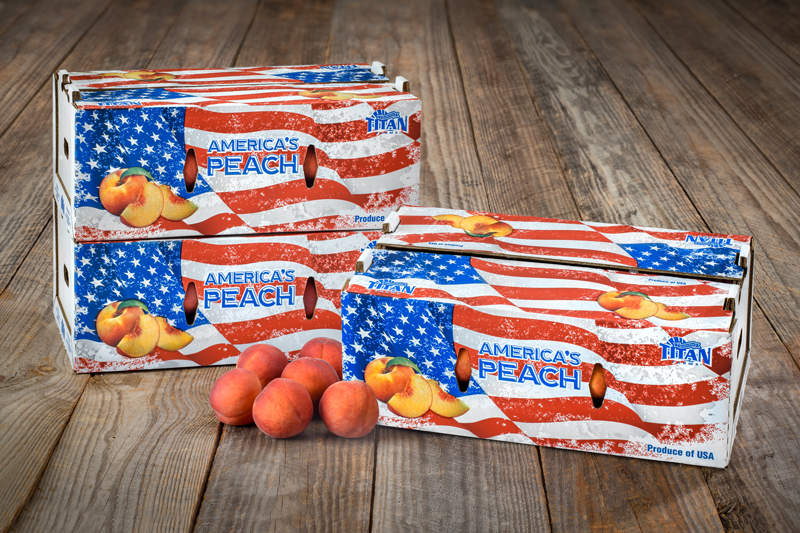
New versions of Deardorff's established labels will be released later this year, the release said. "Celery, Romaine, cabbage and other mix[ed] vegetable items will ship under a redesigned 'Sir William' label beginning this November. The 'Highland Ranch' label, used for [the company's] vine-ripe tomatoes and vine-ripe Roma tomatoes, will receive a new look in June 2007. Customers may notice a mix of old and new labels in the transition."
Deardorff Family Farms was established in 1937. In 1944, "the Deardorff and Jackson families joined forces to establish what would grow to become one of the most recognized and well-regarded names in the produce industry," stated the press release. "The new name and slogan honor four generations of family commitment to produce industry and identify the future path of the company."
Scott Deardorff, secretary of the company, told The Produce News that the announced changes have been in the planning process for six or eight months. "We've been practicing sustainable [farming] for quite some time now," he said. "But that story never seems to get out."
The name change, new slogan and redesigned logo are part of a new effort to "get the story out on our farming practices" and to make people aware "that we are moving into the organic produce business," he said.
Mr. Deardorff noted that sustainability practices have to do with more than just what goes on in the field. "My personal definition is to be sustainable in business -- or in running a country or anything -- you need to balance the three Ps," those being people, planet and profit.
With regard to people, he said, "we as a company pay a competitive wage, focus on workers' safety, and also pay for and provide health insurance to all our employees."
With regard to the planet, "in our conventional agriculture, we practice what I call 'soft farming,' " Mr. Deardorff continued. Soft farming includes integrated pest management and the use of biological resources as a first line of defense against diseases or insects, "before we have to rely on any kind of chemicals," he explained.
That approach to farming requires a lot of attention. "You have to spend time in the field. We have excellent farmers that work for us that spend hours walking fields. As soon as they see any kind of problem, they use the softest method available to target it so it doesn't get out of control," and then resort to harsher measures only if those efforts fail, he said.
"And then of course we are moving, with our own acreage and rented acreage, [toward becoming] certified organic," he added.
"The difference between organic and conventional - that line is getting thinner as newer techniques and materials are being developed that are softer and softer," he said. That is particularly true in the Oxnard area, where "we don't have the same pest problems to deal with as other parts of the country. So we can practice what I think of as soft agriculture very easily."
The third component of sustainability, Mr. Deardorff said, is profit. One cannot continue to run a farming operation without making a profit. "That, by definition, is not sustainable," he said.
In addition to telling the story of "our sustainable farming and our going to organic," Mr. Deardorff said, "we want to make sure people know that we are not a big company." After four generations, "we are still a family farm. We still grow seasonally."
The company may be too big to rely on farmers markets, but it is not big enough "to be just a pure commodity seller and grow thousands and thousands of acres of one crop. We are not nearly that big. We are trying to show people that we are a family farm that can still supply on a smaller scale some of the chainstores with seasonal produce."
"The name change is about defining who we are and what we do," said Tom Deardorff II, the company's president. "My father, uncle, grandfather and great-grandfather earned a reputation for the Deardorff name that was based on hard work, honesty and integrity. We proudly carry the Deardorff name and will continue to honor their efforts with a commitment to ensuring environmental and community health."
That commitment is reflected in a new slogan announced by the company, "Sustainable farming for a healthier life," and in a focus on organic and pesticide-free produce to be shipped under the new "Deardorff Family Farms" label.
The new company name and slogan as well as the movement into the organic arena were announced in a recent company press release.
According to the release, "the new slogan is in place after years of organic farming research and development. New practices are now in operation that employ a much lighter impact on the environment and generate bountiful, great-tasting produce. Deardorff Family Farms is dedicated to reducing chemical use, improving water quality and conservation as well as promoting natural fertility."
New versions of Deardorff's established labels will be released later this year, the release said. "Celery, Romaine, cabbage and other mix[ed] vegetable items will ship under a redesigned 'Sir William' label beginning this November. The 'Highland Ranch' label, used for [the company's] vine-ripe tomatoes and vine-ripe Roma tomatoes, will receive a new look in June 2007. Customers may notice a mix of old and new labels in the transition."
Deardorff Family Farms was established in 1937. In 1944, "the Deardorff and Jackson families joined forces to establish what would grow to become one of the most recognized and well-regarded names in the produce industry," stated the press release. "The new name and slogan honor four generations of family commitment to produce industry and identify the future path of the company."
Scott Deardorff, secretary of the company, told The Produce News that the announced changes have been in the planning process for six or eight months. "We've been practicing sustainable [farming] for quite some time now," he said. "But that story never seems to get out."
The name change, new slogan and redesigned logo are part of a new effort to "get the story out on our farming practices" and to make people aware "that we are moving into the organic produce business," he said.
Mr. Deardorff noted that sustainability practices have to do with more than just what goes on in the field. "My personal definition is to be sustainable in business -- or in running a country or anything -- you need to balance the three Ps," those being people, planet and profit.
With regard to people, he said, "we as a company pay a competitive wage, focus on workers' safety, and also pay for and provide health insurance to all our employees."
With regard to the planet, "in our conventional agriculture, we practice what I call 'soft farming,' " Mr. Deardorff continued. Soft farming includes integrated pest management and the use of biological resources as a first line of defense against diseases or insects, "before we have to rely on any kind of chemicals," he explained.
That approach to farming requires a lot of attention. "You have to spend time in the field. We have excellent farmers that work for us that spend hours walking fields. As soon as they see any kind of problem, they use the softest method available to target it so it doesn't get out of control," and then resort to harsher measures only if those efforts fail, he said.
"And then of course we are moving, with our own acreage and rented acreage, [toward becoming] certified organic," he added.
"The difference between organic and conventional - that line is getting thinner as newer techniques and materials are being developed that are softer and softer," he said. That is particularly true in the Oxnard area, where "we don't have the same pest problems to deal with as other parts of the country. So we can practice what I think of as soft agriculture very easily."
The third component of sustainability, Mr. Deardorff said, is profit. One cannot continue to run a farming operation without making a profit. "That, by definition, is not sustainable," he said.
In addition to telling the story of "our sustainable farming and our going to organic," Mr. Deardorff said, "we want to make sure people know that we are not a big company." After four generations, "we are still a family farm. We still grow seasonally."
The company may be too big to rely on farmers markets, but it is not big enough "to be just a pure commodity seller and grow thousands and thousands of acres of one crop. We are not nearly that big. We are trying to show people that we are a family farm that can still supply on a smaller scale some of the chainstores with seasonal produce."