Detroit bouncing back from bankruptcy, brings hope to produce terminal
Detroit bouncing back from bankruptcy, brings hope to produce terminal
Despite its economic struggles in recent years, the future of Detroit is looking bright as the city’s 16-month-long municipal bankruptcy case, the largest in U.S. history, officially ended Wednesday, Dec. 10.
Although things are certainly taking a turn for the better, the city still has a long road ahead, reversing decades of population loss and restoring its economy to what it once was.
“There are a lot of interesting things happening,” said Michael Badalament, sales associate for Detroit-based R.A.M. Produce Distributors LLC. A two-year budget has been implemented to eliminate the majority of Detroit’s $12 billion debt load. “Are we there? Not yet, but the spirit is and the feeling is, it will be.”
“We still have enormous challenges delivering services in the city every day,” Mayor Mike Duggan told The Associated Press. “But at least now we are no longer a city that’s in bankruptcy.”
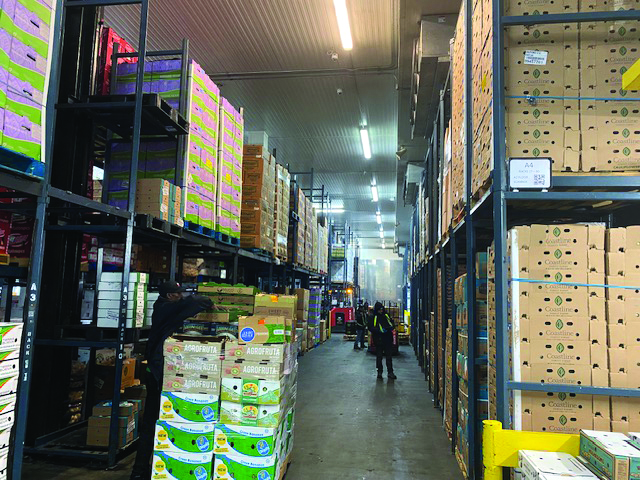
So what’s this mean for the Detroit Produce Terminal? Only good things, or so business folks hope.
“A lot of people weren’t so sure how things were going to shake out a few years back,” said Dominic Russo, buyer and sales associate for Rocky Produce, located on the Detroit Produce Terminal. “But now that the city of Detroit is out of bankruptcy, its economy is really strong. It’s roaring as far as new developments go, and it looks very promising. It’s the hot spot in the country right now.”
Russo added that in the city limits of Detroit, there is a tremendous amount of restaurants opening up, which is bringing a lot more people down to the city. “It’s really helped out the food economy by way of foodservice, and that helps us out for sure,” he said.
Thomas LaGrasso III, vice president of Detroit-based LaGrasso Bros., also commented on the city’s improving economy.
“The economy in Michigan has been gaining momentum in recent years, and 2014 is a reflection of that continued growth,” he said.
Thanks to Emergency Manager Kevyn Orr, who reached deals with most of the city’s creditors, a two-year budget has been implemented to eliminate a majority of Detroit’s $12 billion debt load.
As part of the approved plan, the city will have $1.7 billion to spend over the next 10 years to improve essential services, including investments in police, fire and sanitation departments.
Other improvements to the city will be made, such as fixes to its street lights and removal of blighted buildings. Cuts to some retirees’ pensions and civilian employee benefits were also made.
“It is now time to restore democracy to the people of the city of Detroit,” said Judge Steven Rhodes, who approved the city’s plan to rid itself of debt.