LSU Sweet Potato Research Station efforts yield improved varieties
LSU Sweet Potato Research Station efforts yield improved varieties
The Louisiana State University AgCenter Sweet Potato Research Station is the only center in the United States, and possibly in the world, that is dedicated solely to sweet potato research and development.
Tara Smith, director of the center, explained to The Produce News that the station, established in 1949, is involved in all aspects of sweet potato production, including developing new seed varieties, increased technology and insect, virus and disease control.
“The program implementation has obviously changed throughout the years to keep pace with new varieties and technologies,” said Smith. “Today we’re able to screen for the presence of known viruses that can contribute to the decline or damage to sweet potato crops through in vitro tissue culture technology.”
She said that the center has one of three seed programs in the United States. Another is at North Carolina State University and one is within the U.S. Department of Agriculture.
“By collaborating on our research, the three centers combined enable us to provide ‘clean seed’ to commercial growers and home gardeners,” said Smith. “And we have seen a strong increase in home gardening with sweet potatoes.”
Smith also credited Christopher Clark, professor of the center’s Plant Pathology and Crop Physiology department, as well as Don Labonte, professor of the School of Plant, Environmental and Soil Sciences, also at the center, for the advanced research results produced there.
She explained that several sweet potato varieties are managed by the research station, which are all patented and released through the university.
“The Evangeline, Orleans and the Murasaki-29 are managed varieties,” she said. “The Murasaki-29 is a purple-skin, white-flesh variety that appeals especially to ethnic groups. This variety is grown most heavily in California, and revenues from its production come back to us which helps to support our continued research.”
The Murasaki-29, she noted, has basically replaced the Kopavuki, also a purple-skin variety, which was dominant prior to the release of the newer one.
“The Bonita is also a managed sweet potato variety,” Smith added. “The O’Henry is white mutation of the Beauregard, and it did perform well for us, but it is occasionally odd-shaped. The Bonita is better in terms of shape and color from end to end.”
The center’s seed program also produced another managed variety, the LA07-146, now named the Bayou Belle. It was released in 2012.
Smith explained that it is a very unique sweet potato variety with bright orange flesh and red-purple skin. On average, it yields 15 percent more than the Beauregard. It is licensed by ConAgra Foods Lamb Weston division under an agreement with the university.
“Growers in Louisiana are not restricted in producing the Bayou Belle,” said Smith. “But growers outside of the state must acquire a license from ConAgra.”
Arthur Villordon, also a professor at the station, holds degrees in horticulture, plant breeding and agriculture. Smith said he continually works to improve sweet potato production efficiencies.
“He evaluated different production variables in an effort to improve efficiencies, and that translates into better yields and quality for our producers,” she said. “Arthur also researches nutrient management, irrigation and water quality and quantity.
“Plants have unique characteristics and efficiencies are found by looking at things like climatic factors,” Smith continued. “Such factors need to be taken into account in order for growers to make informed management decisions for their crops.”
She added that things as basic as making sure that soil conditions are conducive to planting are imperative in helping to determine the success of a crop.
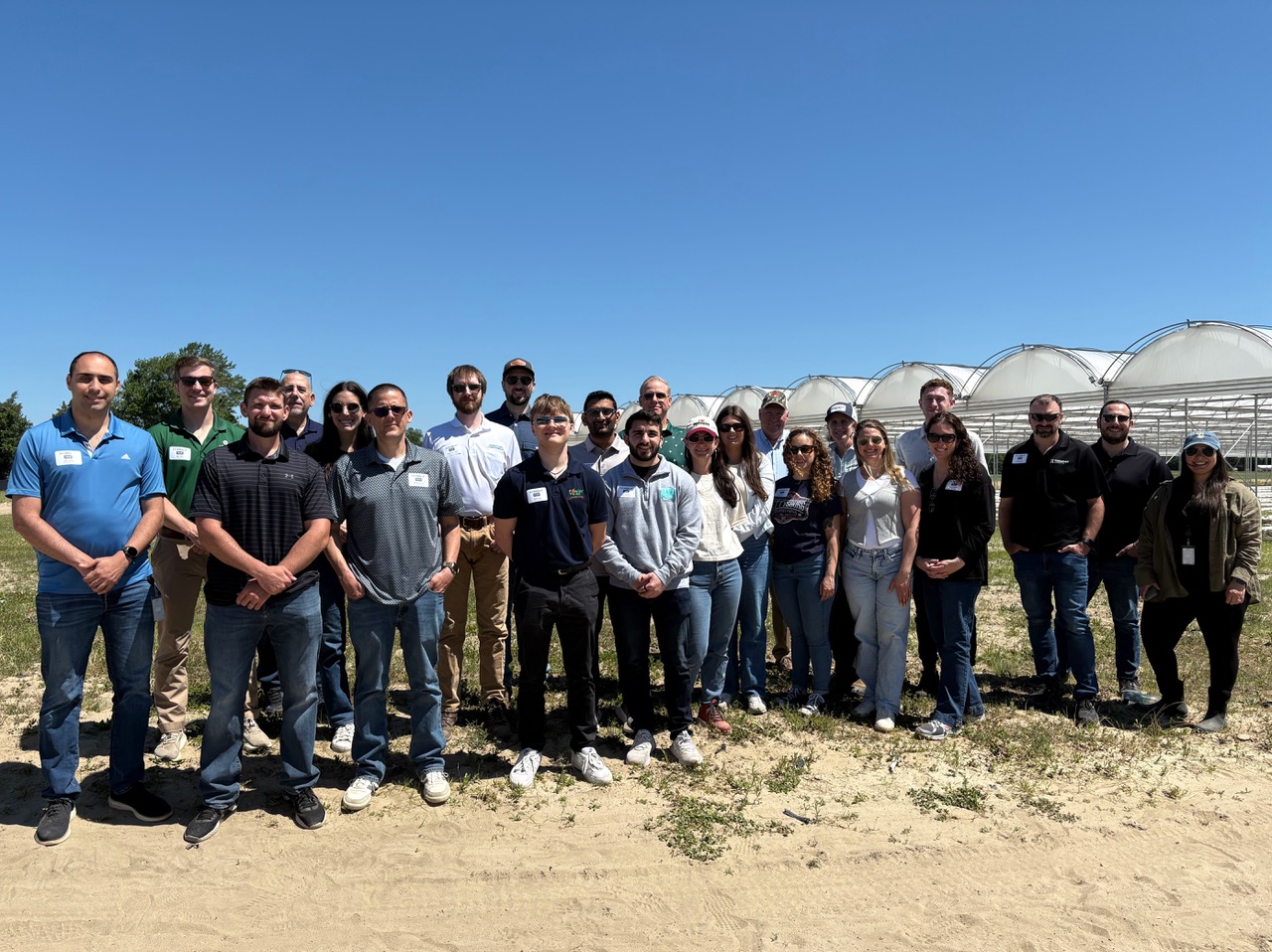
The LSU AgCenter hosted a field day Aug. 16 at its Sweet Potato Research Station in Chase, LA. Field tours featured AgCenter research and extension faculty members. Presentations highlighted the foundation seed program as well as current breeding, production and pest management research projects. Field day topics also included improving production efficiency, optimizing cultural practices for both fresh market and processing sectors and production economics.
During the event the center also demonstrated a prototype bulk harvester at Thornhill Farms located in nearby Wisner, LA.