Novazone boosting its presence in the food industry
Novazone boosting its presence in the food industry
BALTIMORE -- Novazone Inc., a provider of innovative ozone- based solutions to improve the freshness and safety of food and water, is looking to make its mark in produce as part of its plan to become strategically focused on the food industry. The company was on hand promoting its services at the International Fresh-cut Produce Association's Fresh Cut Expo 2006, here, April 26-29.
Paul White, chief executive officer of the Livermore, CA-based company, said that he has noted more demand from the food industry as environmental legislation has ramped up regarding the use of chemicals traditionally used in the food disinfection process. Mr. White said that ozone is highly effective as a disinfectant for food, as well as to control both ripening and decay.
"Basically, if they store it or use water on it, we are an environmentally friendly option," said Mr. White.
Ozone can be used in either an aqueous or a gaseous state, said Mr. White. As such, it has versatility along the distribution chain. In packing operations, ozone can be used in flume water to disinfect produce before it is packed. He cited cherries and asparagus as two commodities that have experienced the benefits of ozone applications.
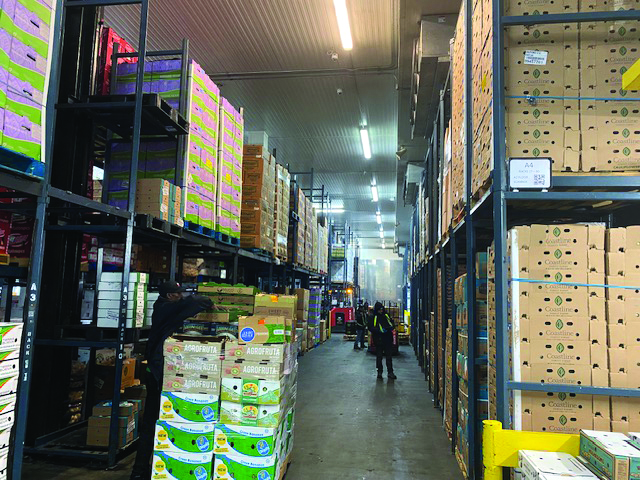
In its gaseous state, ozone effectively controls mold in the air of a cold storage facility, for example. Mr. White cited a recent test case where the storage life of pears was extended by six weeks with the use of ozone.
This summer, the company is launching a new product that is designed for use in shipping containers. A recent test on nectarines resulted in a shelf life extension of three to five days, which could be especially attractive to tree fruit shippers sending product from California to New York.
Gaseous ozone helps suppress the natural production of ethylene, said Mr. White, so when used on a product like nectarines, the natural ripening process can be arrested. When the product arrives at destination, ozone use is discontinued and natural ethylene output resumes and ripens the fruit.
Novazone currently has about 250 customers in 16 countries around the world. While there are other companies that provide ozone systems, Mr. White said that when a company uses Novazone, it gets the proper service needed to maintain an effective ozone program. Or as Mr. White put it, "Others sell the equipment but not the science. We supply both."
Ozone is not new technology, having been used for decades in municipal water supplies. The Netherlands began using the technology in its drinking water systems in the late 1800s. But people and companies are starting to realize the hazards of chemical use for their workers and on their foods, said Mr. White, and so the awareness of ozone has grown.
And a main benefit of ozone, an oxygen molecule, is that it converts back to its natural state after 20 minutes at ambient temperature, so there is no concern with disposal, said Mr. White. The return on investment for a company converting to an ozone system from Novazone varies, said Mr. White. The company does offer financing as well as service contracts.
Paul White, chief executive officer of the Livermore, CA-based company, said that he has noted more demand from the food industry as environmental legislation has ramped up regarding the use of chemicals traditionally used in the food disinfection process. Mr. White said that ozone is highly effective as a disinfectant for food, as well as to control both ripening and decay.
"Basically, if they store it or use water on it, we are an environmentally friendly option," said Mr. White.
Ozone can be used in either an aqueous or a gaseous state, said Mr. White. As such, it has versatility along the distribution chain. In packing operations, ozone can be used in flume water to disinfect produce before it is packed. He cited cherries and asparagus as two commodities that have experienced the benefits of ozone applications.
In its gaseous state, ozone effectively controls mold in the air of a cold storage facility, for example. Mr. White cited a recent test case where the storage life of pears was extended by six weeks with the use of ozone.
This summer, the company is launching a new product that is designed for use in shipping containers. A recent test on nectarines resulted in a shelf life extension of three to five days, which could be especially attractive to tree fruit shippers sending product from California to New York.
Gaseous ozone helps suppress the natural production of ethylene, said Mr. White, so when used on a product like nectarines, the natural ripening process can be arrested. When the product arrives at destination, ozone use is discontinued and natural ethylene output resumes and ripens the fruit.
Novazone currently has about 250 customers in 16 countries around the world. While there are other companies that provide ozone systems, Mr. White said that when a company uses Novazone, it gets the proper service needed to maintain an effective ozone program. Or as Mr. White put it, "Others sell the equipment but not the science. We supply both."
Ozone is not new technology, having been used for decades in municipal water supplies. The Netherlands began using the technology in its drinking water systems in the late 1800s. But people and companies are starting to realize the hazards of chemical use for their workers and on their foods, said Mr. White, and so the awareness of ozone has grown.
And a main benefit of ozone, an oxygen molecule, is that it converts back to its natural state after 20 minutes at ambient temperature, so there is no concern with disposal, said Mr. White. The return on investment for a company converting to an ozone system from Novazone varies, said Mr. White. The company does offer financing as well as service contracts.