Pompano State Farmers Market slated for hurricane repairs in the near future
Pompano State Farmers Market slated for hurricane repairs in the near future
Don Coker, chief of state markets for the Florida Department of Agriculture & Consumer Affairs, oversees the state's 13 farmers markets. He said that the Pompano State Farmers Market had about $70,000 in damage caused by Hurricane Wilma last October.
"The majority of the damage was to the old administration building, and most was to the roof," he said. "We have patched it up temporarily, and as soon as FEMA comes through with funding, the permanent repairs will be underway."
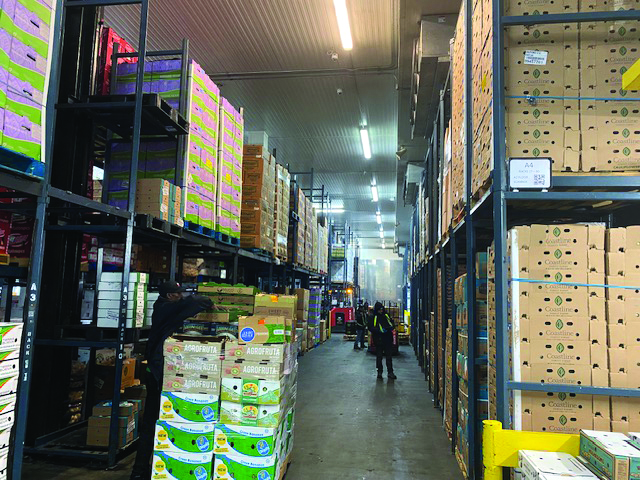
The Pompano market sits on a 22-acre site, and like other Florida markets, it is dedicated solely to fresh produce. Most of the markets are wholesale shipping markets, although some have retail sections. All perform similar functions that include washing, waxing, grading, boxing, refrigerating and shipping fresh fruits and vegetables.
"Market professionals are facing some strong competition today from South [America] and Central American suppliers," said Mr. Coker. "We are seeing it in green beans, lettuces, squashes, cucumbers and other products. The western areas of Florida, especially Immokalee, have their competitive forces as well, especially with Mexican supplies."
The Pompano market opened on Nov. 16, 1939. Mr. Coker said that the majority of the state's markets opened in the 1930s and 1940s, except for the Suwannee Valley State Farmers Market, which opened in 1988.
"Long-term maintenance can be a problem with older terminals," said Mr. Coker. "By the time some of the traditional companies reach their third to fifth generations, they have grown so large that they are forced to move off of the markets. Most move into their own new facilities that can provide them with modern equipment and technologies. We view these changes as positive economic developments. Companies come to the market, they grow and develop, and then they move off. We are pretty successful at recruiting new companies to take their places."
Not all companies that grow in size and volume move off the markets, however. Edward Myrick Produce, for example, is a leading Pompano produce company, and it has been a tenant on the Pompano market for more than 50 years.
Growing companies need more space, of course, and this has changed the profile of some of the markets in the state. The Florida City State Farmers Market, for example, had 45 tenants at one time. Today it has only 16, but they are much larger than they were years ago.
Mr. Coker said that increasing numbers of growers are banding together to form partnerships. They generally form these alliances before moving to one of the markets. It gives the entity a stronger presence in the industry than any one could maintain alone. Although this type of business represents only a small portion of the tenant profile at the Florida markets today, it is an indication of how companies are changing to meet the growing competition in the industry.
"In the 10 years that I have been involved, we have maintained between a 90- and 95-percent occupancy rate at the markets," Mr. Coker said. "We encourage companies to come, and we are thrilled to see them grow. We aren't always happy to see them go, but usually because they've been good tenants and valuable representatives of the produce industry."
Mr. Coker noted that although there are other influences affecting the present-day market, there is much consistency as well.
"We are also seeing changes that are related to increasing land values, but we feel sure that there will always be strong farming representation in Florida," he said. "Farmers are a resilient group, and no matter how many storms they face or how land and other industry issues change over the years, they will always take to the land to grow crops."
(For more on the Pompano deal, see the April 17 issue of The Produce News.)
"The majority of the damage was to the old administration building, and most was to the roof," he said. "We have patched it up temporarily, and as soon as FEMA comes through with funding, the permanent repairs will be underway."
The Pompano market sits on a 22-acre site, and like other Florida markets, it is dedicated solely to fresh produce. Most of the markets are wholesale shipping markets, although some have retail sections. All perform similar functions that include washing, waxing, grading, boxing, refrigerating and shipping fresh fruits and vegetables.
"Market professionals are facing some strong competition today from South [America] and Central American suppliers," said Mr. Coker. "We are seeing it in green beans, lettuces, squashes, cucumbers and other products. The western areas of Florida, especially Immokalee, have their competitive forces as well, especially with Mexican supplies."
The Pompano market opened on Nov. 16, 1939. Mr. Coker said that the majority of the state's markets opened in the 1930s and 1940s, except for the Suwannee Valley State Farmers Market, which opened in 1988.
"Long-term maintenance can be a problem with older terminals," said Mr. Coker. "By the time some of the traditional companies reach their third to fifth generations, they have grown so large that they are forced to move off of the markets. Most move into their own new facilities that can provide them with modern equipment and technologies. We view these changes as positive economic developments. Companies come to the market, they grow and develop, and then they move off. We are pretty successful at recruiting new companies to take their places."
Not all companies that grow in size and volume move off the markets, however. Edward Myrick Produce, for example, is a leading Pompano produce company, and it has been a tenant on the Pompano market for more than 50 years.
Growing companies need more space, of course, and this has changed the profile of some of the markets in the state. The Florida City State Farmers Market, for example, had 45 tenants at one time. Today it has only 16, but they are much larger than they were years ago.
Mr. Coker said that increasing numbers of growers are banding together to form partnerships. They generally form these alliances before moving to one of the markets. It gives the entity a stronger presence in the industry than any one could maintain alone. Although this type of business represents only a small portion of the tenant profile at the Florida markets today, it is an indication of how companies are changing to meet the growing competition in the industry.
"In the 10 years that I have been involved, we have maintained between a 90- and 95-percent occupancy rate at the markets," Mr. Coker said. "We encourage companies to come, and we are thrilled to see them grow. We aren't always happy to see them go, but usually because they've been good tenants and valuable representatives of the produce industry."
Mr. Coker noted that although there are other influences affecting the present-day market, there is much consistency as well.
"We are also seeing changes that are related to increasing land values, but we feel sure that there will always be strong farming representation in Florida," he said. "Farmers are a resilient group, and no matter how many storms they face or how land and other industry issues change over the years, they will always take to the land to grow crops."
(For more on the Pompano deal, see the April 17 issue of The Produce News.)