River Point eyeing facilities upgrades
River Point eyeing facilities upgrades
Owners at River Point Farms, America’s largest onion producer headquartered in Hermiston, OR, are moving forward with a new business plan including major improvements at the company’s facilities. “We are currently focused on substantial equipment and facility upgrades to be completed over the next 18 to 24 months,” President and Chief Executive Officer Bob Hale told The Produce News.
This past September, Hale and his brother, Rick, — who also own and operate Hale Farms — joined with Salinas, CA-based Taylor Farms to become controlling partners in the company. The company is a year-round supplier of onions throughout North America. Whole, peeled and fresh-cut onions are marketed to the company’s customer base.
 Each year, River Point Farms produces 450 million pounds of onions marketed evenly throughout the 52-week period beginning in September. (Photo courtesy of River Point Farms)“We produce about 450 million pounds of onions per year, marketed fairly evenly over a 52-week period beginning around first of September,” Hale continued. “Our typical customer is an industrial ingredient company, national restaurant chain, foodservice company or national retail chain.”
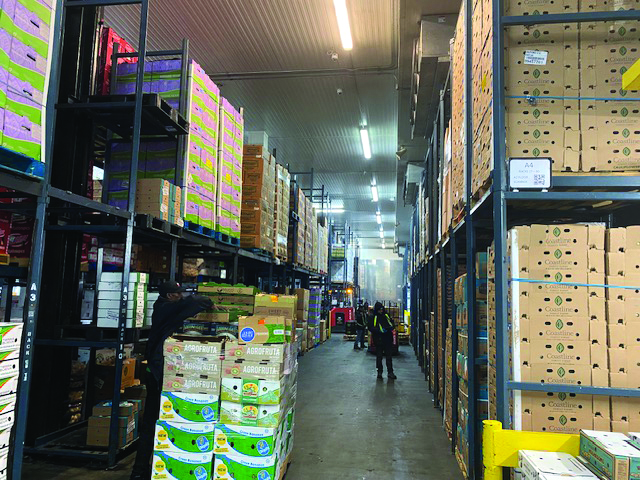
River Point Farms grow 10 different varieties of yellow onions as well as 10 varieties of reds. “Annually, we store about 300 million pounds in hi-tech climate controlled warehouses where we can add heat, refrigeration, air and/or humidity,” he continued.
The company works to exceed its customers’ expectations. “We take into account the individual needs of our customers when designing production and storage needs, enabling us to provide unparalleled year-round service in today’s onion industry,” the company’s website states. “By contracting and selling products before we plant seed into the ground, we are able to stabilize our customers’ costs. Utilizing this method has enabled us to become the large-scale, low-cost, high-quality producers that we are today.”
Self-audits are conducted internally to ensure proper sanitation requirements are being met including personal hygiene, employee training, and pest control.
This year’s growing season was challenging. Hale said yields for the storage crop are “a bit below budget.” But he said quality is good.