Ringer & Son sees impact from Colorado freeze, drought
Ringer & Son sees impact from Colorado freeze, drought
Sales agents at longtime Colorado broker Ringer & Son are reporting mixed conditions for some of the state’s most popular produce crops. Sweet corn will come in late but should bring volume similar to past years; peaches are down considerably due to early freezes; and Rocky Ford cantaloupe is up 20 to 30 percent over 2012.
According to Ringer President Joshua Johnson, growers Mike Ahlberg and sons, Zach and Scott, will start harvesting famed Olathe-area sweet corn from 600-plus acres near Delta, CO, around July 20, and loads will continue to go out through mid-September.
However, Johnson said the Ahlbergs have been dealing with the state’s ongoing drought conditions by using water initially planned for field corn, cutting into that crop’s production.
 Olathe-area sweet corn grown by Mike Ahlberg and his sons, Zach and Scott, is sold by Ringer & Son of Commerce City. The summertime treat will start shipping around the third week of July and run through mid-September. “We just didn’t get enough snowpack for irrigating everything this year,” Johnson said. The sweet corn deal, a hallmark of Western Colorado, is seeing increased out-of-state movement, he said. And he noted that the Ahlbergs had planted additional bi-colored corn this season, with a bit less white in the fields. Yellow sweet corn volume will be on par with past years, he said.
Another popular Western Slope crop is Colorado peaches, handled by Debra Pate at the Ringer offices in Commerce City, CO. Pate said two early freezes in April cut production by an estimated 40 percent this year.
“Due to the freeze the crop will be approximately three weeks late, and we will not have any volume until the first of August,” she said. Peaches will ship through September.
Pate also handles potatoes out of the San Luis Valley, which traditionally ships new crop starting in September.
Working the Northern Colorado and Lower Arkansas Valley growing areas of the state is Gene Schneider, who said growers are experiencing two sides of the farming coin. Northern Colorado is finding ways to deal with the drought and was hit by freezes.
“Product is very late coming in this year due to a couple of late spring freezes that devastated the early plantings, causing farmers to replant their crops,” Schneider said. “Afterwards we experienced unusually high temperatures, which stressed out some row crops and new plantings as well. For the most part many of the vine crops like zucchini, cukes and hard squashes were a little late but will be in full swing by mid-July the next two weeks. Light hail last week had no effect on crops.”
As for irrigation, Schneider said, “Water allocation was similar to last year. Most growers shifted acreage out of water-intense crops, which will not affect volume of fresh produce [this season].”
The primary produce items grown in Northern Colorado are onions, cabbage, carrots, corn and leaf items, although “a smattering of other vegetables are available,” Schneider said. “Due to replanting, the growers should have good volume when it hits, but it will come on in a shorter ‘season’ as opposed to staggered through the course of the summer. Bumper crops are not necessarily advantageous marketwise, and I think generally speaking we are already seeing gaps in most row crops and due to the erratic weather so far. This may be a pattern to be reckoned with.”
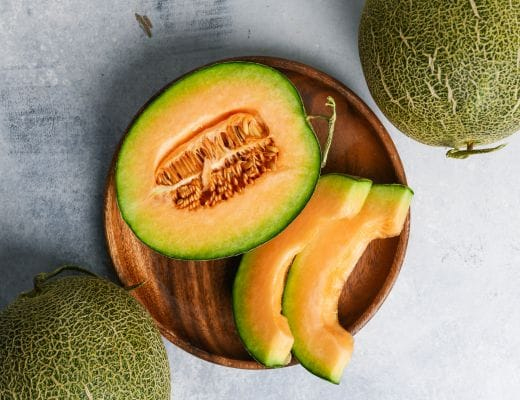
A bright spot in the Colorado story comes out of the Lower Arkansas Valley, where Rocky Ford cantaloupe and other melons are grown.
“Production numbers for melons out of Rocky Ford are up 20 to 30 percent this year,” Schneider said. “Rocky Ford experienced no early freezes, although high winds and no rain has taken a bit of a toll. Some acreage has been stressed by wind shredding and twisting young plants, but the feeling is that due to the high temperatures the plants will bounce back and recover nicely. Projected start dates are July 25 for cantaloupe, Aug. 1 for honeydew and watermelon, with shippable volumes within a week of those dates. Also, continued hot weather could push dates up a bit. Honeydews and watermelon should go through the first week of September, and cantaloupe is expected to go until first freeze, around Oct. 1.”
Most of the melons will stay in-state, but Schneider said, “Buyers are excited about promoting and merchandising Rocky Ford melons of all types.”
Positive media coverage, efforts by the state agriculture department and “the historical pride we have for Rocky Ford melons” have helped change public awareness after the listeria tragedy in 2011.
Schneider also lauded grower Michael Hirakata, who “has doggedly pursued a path of providing the latest in a state of the art processing line as well as a top notch cooling system and facility that complies with the optimum standards in food safety,” including a complete chain of origin as well as a superior rating on his GFSI certificate level.
Assisting Johnson, Pate and Schneider with Colorado sales are Dayn Borgmann, who also works California, and company newcomer Matthew Lee. Lee, a Colorado native, worked with Albertson’s for 15 years before coming to the brokerage this year.
“I began my produce carrier at age 16 with Albertson’s, and I worked as a part-time produce clerk, stocking the dry tables and wet rack in the evening after school. After graduating from high school, I began working full time as the produce assistant manager,” Lee said.
At age 19, he was promoted to produce manager, and after two years in that position, he became quality control manager and buyer as well as banana ripening manager at the Albertson’s distribution center in Aurora, CO.
From Albertson’s, Lee moved to FreshPack Produce in Denver as a buyer in the procurement department and ultimately serving as director of procurement. He also trained in the organic segment of the market.
“Now I am at Ringer & Son and am very grateful and excited to work with some very well-versed people on this side of the produce business,” Lee said in mid-June.
“I look forward to the opportunity I have and the challenge of learning a completely new view point of the produce business,” he concluded.