Prime Time International forecasts continued growth for peppers
Prime Time International forecasts continued growth for peppers
Anchored by its line of colored peppers, Prime Time International of Coachella, CA, offers a variety of vegetables to its customers on a year-round basis, but always looks forward to field production moving to its home base at this time of year.
For more than 20 years the company has been a colored pepper specialist, with that commodity accounting for about 85 percent of its sales. It offers green, yellow and Bell peppers year round, selling both the elongated varieties and the blocky types. It has both field and greenhouse production to offer the varieties its various customers like best.
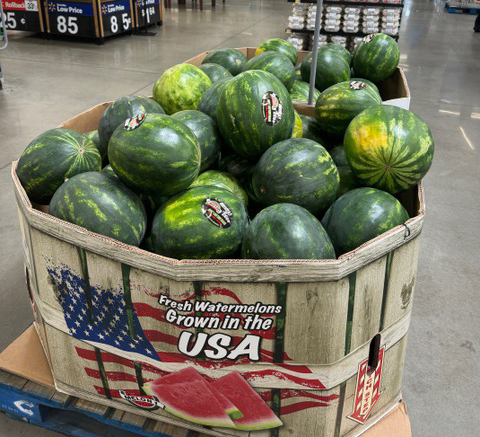
 Green Bell peppers at Prime Time’s Coachella packinghouse.In addition, as the Coachella Valley deal moves into full production in May, Prime Time will also have cucumbers (produced in Mexico), hard squashes, three colors of corn (white, yellow and bi-color) and watermelon. At this time, Prime Time’s desert green bean deal has concluded.
“We appear to be five to seven days early on most crops, which we like because it gives us more selling days before Memorial Day,” said Mike Aiton, marketing manager.
Coachella Valley tends to fill the production niche in the middle of the spring while it is still a bit too early for many other growing regions across the country.
In general, he said the pepper market continues to do very well, with consumers showing great demand for the various peppers even in the face of increasing supplies. The mini-pepper has especially seen strong growth. Mr. Aiton said Prime Time shoots for a tri-color pack with equal numbers of red, orange and yellow peppers measuring about two inches in length. However, he says Mother Nature plays a huge role in determining both the color makeup of the pack and the size of the peppers. “It’s still an imperfect science,” he said.
Early in the season, the plants are producing big peppers and it is hard to harvest them all at the optimum size. So the individual peppers in these packs tend to be a bit larger. Red peppers, which are the variety with the largest acreage, often have more peppers in the pack than the other colors. As the season wears on, the size of the peppers produced by the plant tends to decrease in size and it’s a bit easier to get the optimum two-inch peppers harvested and packed.
Mr. Aiton said the public seems to have determined that its favored pack size is the two-pounder. “I thought the one-pounder would become the most popular,” he said. “The two-pounder outsells the one-pounder, which is the exact opposite of what I predicted.”
In any event, he said pepper sales continue to explode at retail. “I was in Trader Joe’s the other day and saw that they had eight different pepper SKUs. That was unheard of a few years ago.”
For its operation, Prime Time has added a flow wrap packing machine in its shed, which will help the company keep up with pepper demand of all kinds and put out a more uniform pack that uses less plastic. The company has also added a new young salesman to its desk in Connor Melancon. “He has been working in our Oxnard office learning the ropes and we are now bringing him down here as a sales associate and he will be working the phones for us this season.”