Mexican imports huge for south Texas produce industry
Mexican imports huge for south Texas produce industry
The first year for Mexico to ship more than 100,000 truckloads of fresh produce through Texas was 2007.
By 2018, the number of Mexico-grown fresh fruit and vegetable loads crossing through Texas had risen to 246,143. This marked a 143.6 percent increase in just 11 years, and a rate of growth that is expected to continue well into the foreseeable future, according to Dante Galeazzi, who is the president and chief executive officer of the Texas International Produce Association. TIPA is based in Mission, TX, and represents Texas produce, as well as those who import and distribute foreign produce through Texas, which happens to include Mexico’s finest.
 Modern cold warehouse facilities, applying the latest technology, such as this loading dock at the new Evergreen Cold Storage in Pharr, are being built at a fast pace to accommodate the rapid growth of Mexican produce imported into south Texas.Galeazzi shared in writing with The Produce News the following thoughts on the growth of Mexico’s produce industry and what led Texas distribution to play such an important role for Mexican producers:
Why Mexico?
Mexico makes sense as a major production point for fresh fruits and vegetables for a host of reasons, but let’s focus on the biggest contributors.
Cost of production: the cost to grow in the U.S. continues to rise every year. That cost is also increasing in Mexico, but for many commodities that cost is still below that of the United States.
Logistics: Mexico borders the United States, so product travels a much shorter time and thus reaches store shelves and consumers considerably faster than product from many other countries.
The logistics through Texas means even fewer miles and less costs (both for freight and handling), plus from Texas a direct shipment can hit anywhere in the United States within four days.
Environment: The diversity of growing conditions in Mexico means the list of potential commodities is equally diverse. Berries and leafy greens can arrive the same time of year as a load of pineapples or mangos.
Trade Agreement influence
After NAFTA went into effect Jan. 1, 1994, Mexico quickly became a major manufacturing hub for North American goods. This included fresh produce. U.S. companies acted quickly and expanded operations into Mexico, at first to expand their windows of production. Strawberries, vegetables and melons all made sense, as those items were largely limited to spring and summer windows in the United States.
The government of Mexico supported their domestic industry in developing greenhouse production, making large commercial operations possible for tomatoes, cucumbers and squash varieties.
Transportation boost
Freight costs are a big expense in fresh produce. One of the major reasons for the Mexico-Texas growth came a few years ago, with the completion of the Durango-Mazatlan Highway. It connected the west coasts and east coasts of Mexico with a contiguous freeway similar to I-10 in the United States.
More importantly, it cut the travel time for many shipments by up to 50 percent for loads originating in western Mexico (like tomatoes, mangos and melons) and bound to the U.S. East Coast. That time-savings translated into a freight-savings.
It also meant Mexico product bound for the Northeast could be offered from South Texas several days fresher and for less freight as opposed to purchasing the same Mexico product from crossings further west.
Top commodities
In 2018, the top five items through South Texas were avocados, limes, mangos, tomatoes and broccoli. All varieties of berries from Mexico have increased in volume very quickly over the last few years, and the category may soon be among the top five.
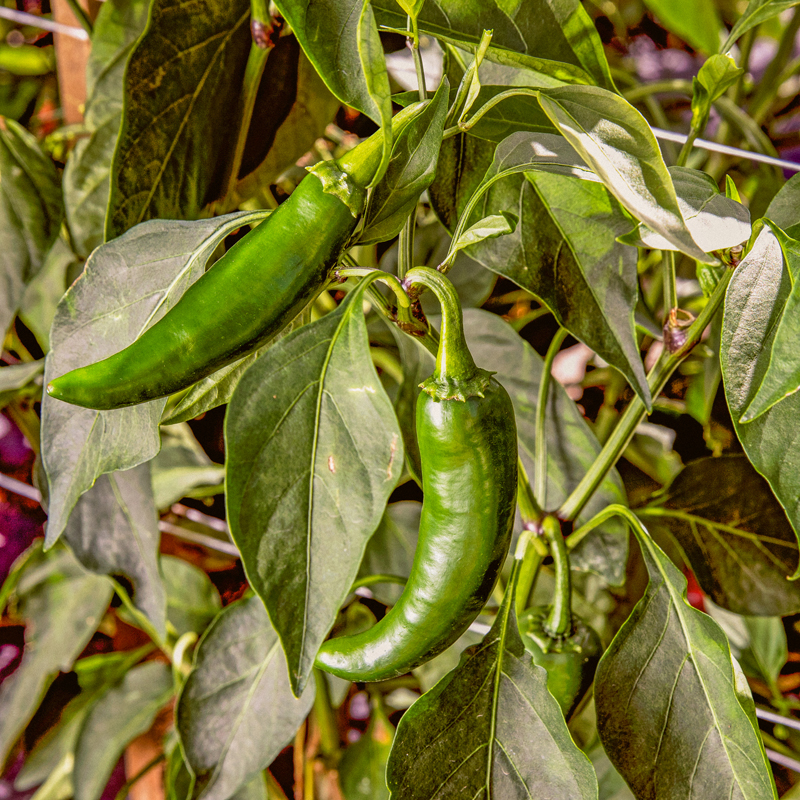
Outside of those items, the list of products that make up the more than $6 billion of fresh produce arriving from Mexico through Texas every year is a testament to the diversity of growing regions in Mexico, as well as the diversity of the American consumer. Manzano chilies, durian fruit, chayote squash, jicama, and jackfruit are all items growing in popularity throughout American cuisine and on the retailer’s shelves.
Demand
The American consumer is demanding more choices at the grocery store and in the restaurant. According to USDA, in 2008 the per capita consumption of fresh tomatoes was 18.5 pounds per year. In 2018, that figure had grown to 20.6 pounds per year. That’s a lot of tomatoes!
USDA reported that avocado consumption grew from 3.8 pounds per person to 8.03 pounds per person during the same time period.
Tastes, cuisine, health and wellness, even accustomed availability (i.e. going to the store and getting watermelon 12 months out of the year) are driving demand. For retailers and foodservice, that means leveraging a system of vendors with multiple sources to fulfill all those needs. And when most of the United States and Canada is covered in snow for several months, it likely means looking to Mexico to fill those gaps. Or in the case of certain tropical items, it may mean looking to Mexico all year long.
Communications contribution
As communications improved, so did demand and thus supply. One need not look far for stories of people 30 years ago spending several months a year traveling throughout Mexico to source products. Now, sourcing for entire supply chains can be done from a desk in the United States without having to travel to Mexico once, thanks to technology. (By the way, that is a massive simplification of the nearly four decades and many challenges, improvements, and ingenuity of industry trailblazers who made the growth possible.)
Looking ahead
The growth shows no signs of stopping. Dr. Luis Ribera with Texas A&M Center for North American Studies projects that total fresh fruit and vegetable imports from Mexico will grow to 634,428 truckloads in 2025. That’s a 31 percent increase over the 2018 USDA reported import levels and a 143 percent increase over 2007 figures, when the United States imported 260,992 loads.
The trend boils down to the importance of South Texas for the North American supply chain of fresh fruits and vegetables. U.S. and Canadian consumers want more, and Mexico can help provide the supply. Buyers are able to source from a small region in south Texas the entire gambit of Mexico’s offerings, while also filling their truck with Texas-grown commodities like onions, grapefruit and cabbage, which makes the region an ideal location for purchasing fresh produce 12 months out of the year.
Plus, being able to secure affordable transportation and reach any major market in four days or less adds to the value of south Texas as a corridor to feed North America. Produce suppliers understood this decades ago, and that’s why companies like London Fruit and J&D Produce began in sleepy Texas border towns so long ago.
Now, the region has seen an explosion of cold-storage facilities and many California and Arizona-based companies positioning personnel and resources here. Produce buyers understand this (and they want to understand more), which is why Viva Fresh keeps regional-education a high-priority for attendees. Even politicians understand the importance of cross-border trade, which is why the region received so much media attention throughout 2019, especially at the peak of the migrant caravan surges last spring.
Keep your eyes on the Lone Star state
While the percentage-growth of imports or the next top item from Mexico may be unknown, what is known is that Mexico-grown fruits and vegetables are a vital part of the industry in North America and the importance of Texas as the entry-point for that produce will continue to grow along-side those imports.