The role of transformative partnerships in creating a sustainable industry
The role of transformative partnerships in creating a sustainable industry

You may recall 15 years ago or so when the food-safety environment was chaotic. Significant outbreaks and new advances in science meant there were a lot of options and opinions over best practices. Food safety is something the entire supply chain — regardless of size or segment — is responsible for doing well. When the entire food industry needed focus the Consumer Goods Forum’s Global Food Safety Initiative came together, studied and selected standards and streamlined the food-safety certification process in a way that all companies could participate.
That time has come again with sustainability.
Sustainability is not a marketing fad. Sustainability practices are and will continue to be the cost of doing business not only to meet our consumers’ expectations, but also to ensure that we are the most sustainable and resilient industry — environmentally and profitably.
The question is how do we measure these practices? How do we know that it’s stacking up and that our investments are furthering our efforts? That is where the Consumer Goods Forum’s Sustainable Supply Chain Initiative comes in. The SSCI’s role right now is to do the work that no organization can do on its own and determine the most trustworthy standards for social and environmental sustainability worldwide. By recognizing these credible and trustworthy programs, the SSCI Benchmark will provide practical guidance for organizations on the minimums for how to evaluate supply chain sustainability.
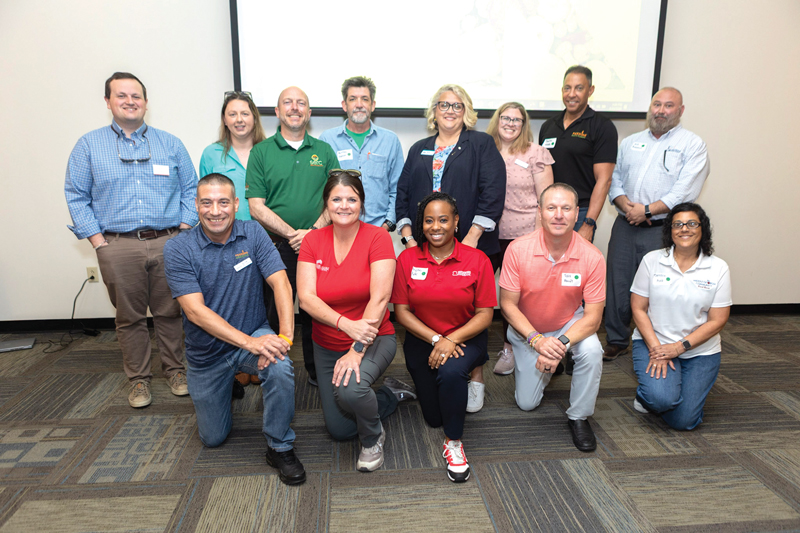
These standards are global and they’re across all industries that provide consumer goods. It is critically important that when global standards are being set, we have a seat at the table and a role in setting them with our industry in mind. I’ve been proudly serving as chair of the SSCI Environmental Working Group, a subgroup of the overall project of which IFPA is one of 23 founding members. I’m also thrilled that our fellow SSCI members will be present with us at the Global Produce & Floral Show in Atlanta.
First they’ll meet with our sustainability council to get to know industry objectives and explore opportunities for collaboration. Afterward, during our Education Festival, we will welcome the leaders as panelist in a stakeholder conversation between industry and the SSCI group. For many of these leaders, this may be the first time that they have the opportunity to engage with so many segments across the fresh supply chain.
The SSCI members will gain insights into the unique challenges and needs of the produce industry, while industry members will learn about the broader sustainability standards being developed by the SSCI. This exchange of knowledge is vital for aligning sustainability goals and ensuring that the standards set by the SSCI are practical and beneficial for our industry.
This connection is critical when you consider the impact that these standards can have for the entire food system. These benchmarking standards inform certification, auditing and monitoring schemes that many organizations will be expected to follow in the years to come. More and more, consumers, retailers and regulators alike are setting expectations for how our industry grows and provides produce and floral through our fresh supply chain. We don’t expect that to change except to get more frequent and more specific.
That’s not to say that it should be seen only as a hoop to jump through or an expense on your business’ budget. Sustainability has the opportunity to also be a boon to your business. While standards and regulations are evolving rapidly, so is climate smart and sustainability focused innovation. Currently, we have over 100 growers enrolled in a Climate Smart Pilot funded through the USDA’s Climate Smart Commodities Grant program.
This program incentivizes growers of specialty crops to adopt one of six climate-smart production practices, with the goal of being able to create a market for fruits and vegetables grown using these methods. We know that in many cases, we have the ability to institute climate smart practices, but the cost is currently too high without consumers looking to pay a premium. This program allows for us to develop those practices, refine and iterate with support from grant funding, in order to create a climate smart practice that is also business smart and in demand from consumers.
These changes to our industry do take time and they can come with a high price for the trailblazers, but the trailblazers are who we need most. IFPA’s efforts to increase grant funding opportunities, educational opportunities, and relationship building with transformative partners like the SSCI and the Consumer Goods Forum are all to ensure that we can help ease that burden and accelerate our progress toward a more sustainable industry — both environmentally and financially.