East Coast ports steam toward a shutdown
East Coast ports steam toward a shutdown
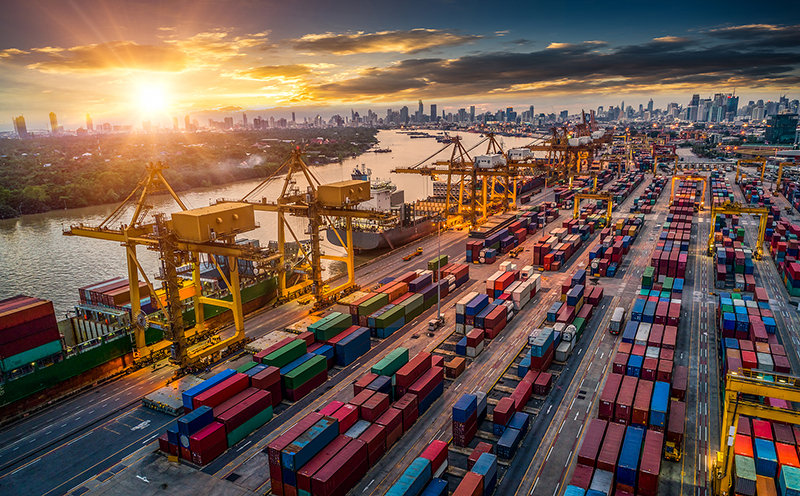
It appears to be a foregone conclusion that dockworkers at more than a dozen East Coast and Gulf Coast ports will go on strike tonight (Sept. 30) as their contract expires at midnight with the negotiations having stalled months ago.
Though U.S. Maritime Alliance (USMX), the bargaining arm of the ports, has filed a court injunction to force the International Longshoremen’s Association (ILA) back to the bargaining table and has also appealed to the Biden Administration to step in and keep the ports open, neither of those remedies appears imminent as the deadline approaches.
In fact, USMX and ILA are far apart on the contract negotiations and their respective characterizations at who is at fault. It appears that the ILA wants to flex its muscles with its first strike since 1977 and those that could step in will allow the strike to begin. In numerous press reports, knowledgeable observers are expecting that the strike could last a week before outside entities are expected to act.
There is a political side to this dispute in this election year as few Democrat or Republican leaders have yet to weigh in. Political pundits have opined that labor is an important component for both parties and neither appears willing to enter the fray. However, those same observers are expecting the Biden Administration to intervene if the ports are closed for an extended period of time, as that could be harmful to the economy. A prolonged strike could end up in shortages of many consumer goods and again trigger higher prices and inflation.
The Biden Administration did intervene and help negotiate a deal between West Coast ports and dockworkers in June of 2023 during work disruptions that lasted about two weeks. Acting Labor Secretary Julie Su was credited with being instrumental in the negotiations, which produced a six-year contract.
ILA is looking for a similar contract for East Coast dockworkers, whose pay scale lags far behind their West Coast counterparts.
Importers have been well aware of the situation and do seem to have planned for it at least in the short run. An East Coast customs broker relayed the efforts of his importing customers, though he asked for anonymity as he was not authorized to publicly report those actions. He said his customers have taken several steps in the past few weeks to mitigate the initial impact. He said there have been three different strategies invoked plus a head-in-the-sand approach.
“A quarter (of the importers) are diverting shipments to other ports; a quarter moved up shipments as well as they could to stock their warehouses; a quarter are planning on using airfreight; and a quarter are rolling the dice and hope this get solved,” he said.
For hard good items, a strike that doesn’t stretch deep into October would be disruptive but not catastrophic because of the actions taken by importers to prepare for such a case. However, perishable product would be impacted almost immediately. While most product that arrives by ship does have some wiggle room for shelf life that will evaporate quickly if the ports remain closed for even a week.
Eric Holt, chief commercial officer for Holt Logistics Corp. in Gloucester City, NJ, did express optimism that the strike would be short-lived prior to “the powers to be at least stepping in and getting them back to talking.”
It’s been well reported that there is a big gap between what ILA wants and USMX has offered with regard to the financial package. ILA has reportedly asked for a six-year deal with a 77 percent increase in wages whereas USMX’s offer is reported to be in the range of 35-40 percent. The union rate for the East Coast and Gulf Coast ports is currently about 30 percent below what the ILA negotiated in their June 2023 contract for West Coast dockworkers.
Holt said second-hand reports from negotiators indicate they expect about a three-day walkout before the Biden Administration steps in and mandates that the two sides get back to bargaining. He opined that it’s a “no win situation” for the administration. “But I am optimistic it will happen,” he said. “A long strike would be devastating for the economy. We can’t afford to let it linger.”
Holt said that in the past week everyone, including his crews, has been working double time and overtime to unload ships and clear the docks of containers in anticipation of the strike. As an example, he said at Monday at 1 a.m., dockworkers began unloading a ship with 700 containers of fresh produce and moving those containers off the docks to make sure the task was completed by the end of the day. “Normally, unloading would have begun at 0-700 (7 a.m.)”
He did note that there are other ports that are not covered by the ILA contract that will remain open even as the ILA dockworkers strike. In fact, Holt operates out of the ports of Philadelphia and Gloucester, with Gloucester workers covered by a Teamster worker. He reported that bananas are the most perishable product that will be impacted by the strike as they have a shelf life of only about two weeks once they arrive at U.S. ports. Another major import currently is citrus, but Holt said they are a bit hardier and could survive a bit longer if the work stoppage is longer in duration. He added that while there are non-ILA ports, they do not and cannot handle the volume that will be impacted by the strike.
One fresh produce item moving into its peak fall shipping period is Peruvian asparagus. Shipments typically peak in October and November ahead of the U.S. holiday season. There is expectation, or at least hope, that unloading of some Peruvian asparagus will continue even as the strike takes places.
Tim Ryan, president of Square One Farms, headquartered in Sunrise, FL, said Seaboard Marine LTD is a major transporter of asparagus from Peru to the U.S. ports of Miami and Philadelphia. “They tell us that they have separate facilities and they will be able to continue to unload even as the strike takes place,” he said.
Speaking to The Produce News on Friday, Sept. 27, Ryan expressed a very cautious optimism that Seaboard’s assurances would come to fruition. He noted that on that Friday there appeared to be a labor slowdown as it was taking longer to get ships unloaded. Ryan said Square 1 is hoping for the best but it is also mitigating the risk by increasing air shipments to cover its commitments to customers if the need arises. “Next week will be the test,” he said, speaking of Sept. 30 to Oct. 5.
Ryan also offered that switching to air shipments is only a partial solution for some customers. He noted that the freight rate on ocean shipments amounts to about $2.50 per carton. As the strike looms and demand for air space has increased, Ryan said the air freight rate has risen quickly with quotes as high as $2.80 per kilo, which is more than twice the normal rate. And equates to as much as $15 per box. “That’s unsustainable,” he said.
Walter Hoffman, a sales executive with CarbAmericas in Fort Lauderdale, FL, also reported that Seaboard Marine had told importers that they would continue to unload even as the ILA goes on strike. “We have our fingers crossed,” he said. “We just don’t know if those workers will cross a picket line if it happens.”
Hoffman said the company is taking a wait and see approach. He noted that there have been rumors that shipments could be diverted to non-union ports in the region, but he cannot confirm that. “Right now, we are putting our confidence in Seaboard and hope they deliver.”
Hoffman said CarbAmericas is currently importing both mangos and asparagus through East Coast ports.
Stephen Espinosa, president of FruVeg Marketing Inc. in Miami, expressed hope that the government would force the two sides back to the bargaining table. “We are all up in the air with the strike,” he told The Produce News. “It seems like it’s definitely going to materialize, and we have no time table as far as when it will get solved. We are hoping President Biden steps in next week and puts a stop to the strike immediately or the industry will be majorly impacted… You are going to see major delays on inbounds, backlogs of unloaded vessel and vessels stuck out at sea because there will be no one available to offload them. Many of these items are highly perishable and cannot withstand the extra days out at sea.”