CPS researchers have diverse expertise, a common goal
CPS researchers have diverse expertise, a common goal
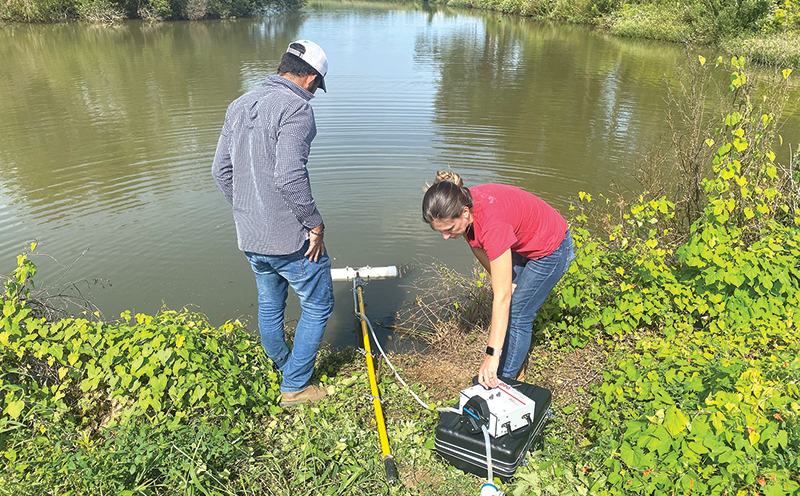
From academia to government to foreign research institutions, Center for Produce Safety-funded investigators have diverse expertise. Together, they are generating results the fresh produce industry can use to minimize food-safety risks.
In 2021, CPS-funded researchers completed 13 projects on important topics from treating agricultural water and process water — to controlling Listeria monocytogenes, Salmonella spp. and Cyclospora — to investigating new technologies such as smartphone-based infrared cameras, ultra-fine bubble technology, antimicrobial blue light and cold plasma. CPS invested over $3.3 million in these projects.
At Spain’s Institute of Agrochemistry and Food Technology, Gloria Sánchez led development of tests to detect enteric viruses in fresh-cut produce wash water. She and colleagues then used the tests to screen three commonly-used wash water sanitizers. Two sanitizers — chlorine and chlorine dioxide — proved effective at inactivating viruses.
Sánchez praised CPS’s advisory technical committee for guiding her group to ensure their research had real-world applications. “Sometimes what happens from a research point of view, our priorities and our ways of thinking are really far away from conditions in the industry,” she said.
Centers for Disease Control and Prevention’s Mia Mattoli looked for Cyclospora cayetanensis in Georgia irrigation water and production environments. Good news, they found none in farm ponds or on produce, and only low levels in area sewage sludge.
“I think the goal is to make sure the waste system stays separate from our food system, and we keep those water lines distinct,” Mattoli said, “and I think that’s what we’ve seen.”
While her project complements Cyclospora research conducted in other U.S. regions, Mattoli warned, “I think coming up with over-arching solutions that apply to the entire U.S. may not be the best approach, but that doesn’t mean that some of the learnings can’t be helpful.”
At the same time, Clemson University’s Paul Dawson modeled growth patterns and transfer of Listeria biofilms in stone fruit packinghouses. He credits CPS for helping him obtain unrestricted access to sample the facilities, which was essential to his work.
Dawson’s team found fruit wax does not prevent biofilm growth, and chlorine proved to be an ineffective biofilm sanitizer at temperatures common to packinghouses. In a follow-up study under way in 2022, he plans to create a user-friendly Excel program that will predict optimum Lm sampling times and sanitation schedules.
While no two farms, packinghouses or processors are the same, the array of CPS research projects offers options from which the entire industry can choose to best meet its needs.
Reprinted with permission from Center for Produce Safety’s 2021 annual report, released in August 2022. For more information about CPS and its work to fund science, find solutions and fuel change in fresh produce food safety, visit www.CenterforProduceSafety.org.