Costco Produce: A model of efficiency
Costco Produce: A model of efficiency
Everything at Costco Wholesale, including its produce section, revolves around its simple mission statement “to continually provide our members with quality goods and services at the lowest possible prices.”
First and foremost, this mantra is achieved by limiting its offerings, which allows the company to concentrate its buying power and leverage that strength to exact the best possible price from its suppliers. The limited SKUs and the open-floor merchandising scheme also create enormous efficiencies, especially in the produce department, as they virtually eliminate hand stacking as almost all produce occupies one full pallet position.
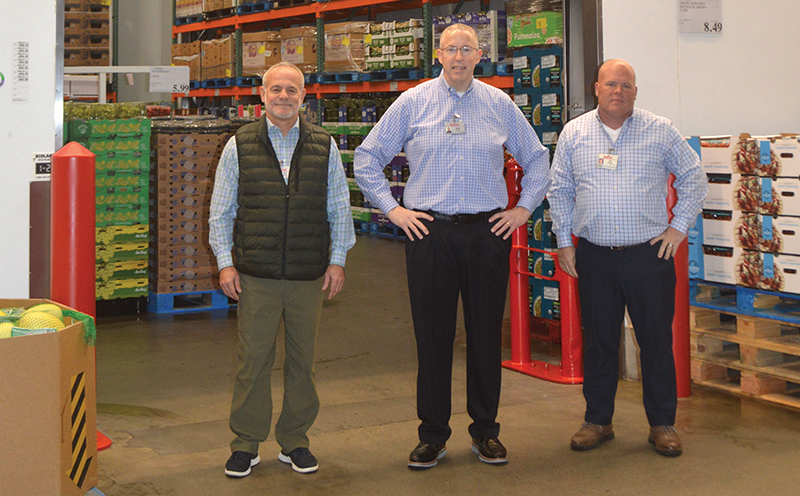
Bob Huskey, vice president of produce, said the concept is to create large, simple displays, with the members/shoppers pulling their daily choices directly from the retail ready displays built at the suppliers’ warehouses. Most items are sold in packages which are typically larger than the average supermarket. For example, all strawberries are in two-pound clamshells, while bags of extra-large avocados are sold as a five or six count. No single avocados are for sale, which is the same sales strategy utilized throughout the department.
“Every SKU, except for a few, is a full pallet. We don’t want to hand stack,” he said. “This allows for a low-cost operation.” He does allow that floor employees do keep close attention to the pallets, culling through product and replenishing inventory throughout the day.
The limited produce SKUs means Costco makes its produce dollars on the top items. Avocados are the top selling item in the department, while strawberries are the top selling berry. While most of the produce items must generate enough sales to earn at least a one-pallet position, the big sellers occupy much more than that amount of space. Bananas sell like proverbial hot cakes and garner half a dozen pallet slots at the Issaquah, WA, location, which creates a massive display.
Many other items have multiple pallet positions on the display floor including pineapples, a plethora of citrus products, several melon varieties, potatoes, onions, pears and the like. Huskey said the apple display includes both organic and conventional pallet positions with the “heavy hitters” taking multiple slots. Honeycrisp is a popular variety, but they rotate many different SKUs in and out such as Organic Cosmic Crisp and Envy.
There is also a large, refrigerated display cooler that has many more items such as multiple pallets of berries, red and green table grapes, all the lettuces and vegetables and salad kits.
There were also single pallet positions throughout the department for items such as mangos, dragon fruit, guava and sweet tamarinds from Thailand. Huskey said there are always opportunities for seasonal items. This December day featured a display of pomegranates on a standard pallet.
Within the past decade, Costco made a big push on organics and that is very evident as one walks through the department as Huskey said organic fruits and vegetables are very important to Costco.
“We know we have organic consumers and we want to take care of their needs,” he said. He also noted that the retailer’s top three produce items are conventional SKUs and it can’t lose sight of that. “With a limited number of SKUs, we must focus on the proper balance of organic and conventional offerings to maximize sales and member satisfaction,” he said.
Huskey added that every produce item, like every SKU in the store, has to earn its spot through consistent sales. Every week he receives a great deal of sales data with sales per week per store per SKU being one of his top barometers. If a product isn’t holding its own, it’s time for an adjustment. This is not to say that you will only find the tried-and-true commodities and varieties.
John Haycox, tropical category buyer, said that each buyer always has potential products on their desk that they are analyzing to determine how they might fit into Costco’s merchandising scheme. What is the item? When is it available? Where can it be sourced? Is there sufficient quantity? Is the condition of the product up to Costco standards? What’s the price point?
He added that product ideas come from research, suppliers, but they also come from member requests. “Because of a member’s request, we recently expanded our plantain offering and it’s doing very well,” he said.
Huskey relies on a team that consists of two AGMMs (assistant general merchandise manager), buyers, assistant buyers and inventory control specialists.
“Costco is a great company, and our employees tend to stay with us for a long time,” Huskey said. “Of our employees in the produce buying office, the average length of time in the company is over 16 years, and the average length of time in this department is over eight years.”
Huskey said the Costco buying philosophy includes getting to know the product and the suppliers. AGMMs, buyers and assistant buyers are encouraged to travel to the growing districts to see their suppliers or attend trade shows around the country. Huskey said the buy/sell relationship is not just transactional at Costco. He said it is a relationship business and he wants all members of the team to build a rapport with the vendors.
Costco has numerous distribution complexes in the United States, with each one servicing dozens of warehouses. There are produce specific employees in the depot that focus on quality control. Costco prides itself on delivering very high-quality produce to its shoppers and the vice president of produce said the best way to ensure that is to weed out any bad apples, if you will, before they get to the store.
Huskey said Costco is a data driven company and he expects artificial intelligence to play a bigger role in analyzing sales trends and optimum use of the available space in the years to come.
Bill Mardon, who is one the two AGMMs on the buying team noted that there is nothing better than a long term, good supplier who understands Costco’s needs and works well with the buying team. “The quality of the product is the most important thing, but great service and good communications are also very important.”
He quipped that the best suppliers “deliver the P.O. and stay off the radar.”
When working with any supplier, Mardon said Costco wants to be an important customer but not overly dominant. “We are mindful of the percentage of their business that we have. We try not to be more than 25 percent.”