Sun Pacific expects significant growth in the grape category
Sun Pacific expects significant growth in the grape category
For the 2017 season, Sun Pacific Marketing Cooperative Inc., headquartered in Pasadena, CA, expects to ship about 4 million cartons of grapes from California’s San Joaquin Valley.
While that is an impressive number, Vice President of Business Development Howard Nager said the firm’s output should increase by an additional 50 percent over the next few years.
“The grape industry, over the past few years, has morphed into a consumer-focused, variety-specific program with newer, better-tasting varieties,” he said.
This is a direction that sits well with the Sun Pacific owners and senior leaders. After all, the company is a leader in consumer-centric produce, such as its easy-peel Cuties brand clementines and mandarins, and its similarly positioned kiwifruit brand called Mighties.
This San Joaquin Valley grape season, which stretches from July through December, will see Sun Pacific shipping 14 different varieties of red, black and green grapes. For the most part, these varieties have come into play over the last decade and represent the new trends in table grape production, such as larger berries, with great crunch and a sweeter taste.
Included in this group are three limited-edition varieties offered to grower-shippers by Sun World on a licensed basis. Under its own label, Sun Pacific will ship Autumn Crisp, Scarlotta and Adora.
Nager said Autumn Crisp is a large, green grape that will be harvested from mid-August through October. He called Scarlotta “a large, sweet, aromatic red grape that will fill a later time slot. We will harvest that from October to December.”
In that same time period, Adora, a very large black grape, will also be part of the Sun Pacific lineup and shipped under its Air Chief label.
Nager said each of these varieties fits into the firm’s varietal jigsaw puzzle, which will provide retailers and consumers both conventional and organic grapes in all three colors for the beginning of the season to the end.
“Currently, we offer eight of our varieties both organically and conventionally,” he said. “The other six are in transition, so eventually we will offer all 14 varieties either way.”
Though Sun Pacific has been in the grape industry for more than two decades, Nager said it was this trend toward new, proprietary varieties that caused the firm to refocus its energy on the category and hone in on the varieties it wants to sell.
“Color, size and Brix are all critical,” he said.
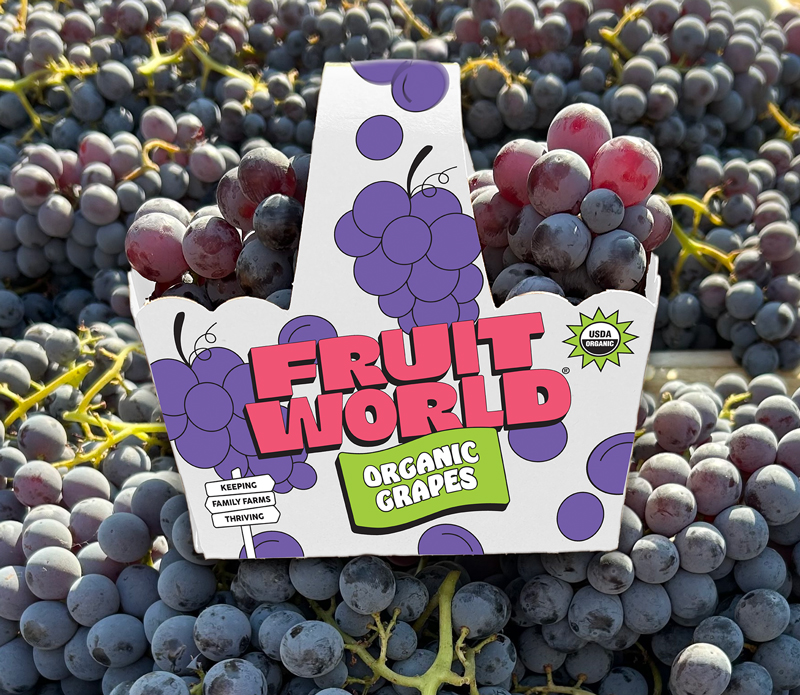
A natural byproduct of that refocus was increased involvement in the organic end of the business. Nager said it is no secret that organic production is having trouble keeping up with demand. He credited owner and grower Berne Evans with having the foresight to plant permanent organic crops before the market was as robust as it is today. He said it was the same visionary qualities that led Evans to plant mandarins before that commodity took off as a consumer favorite.
Sun Pacific expects its own organic volume to grow over the next few years to about 20 percent of its total production.
But Nager said that won’t be enough to keep up with demand. “This season there should be some spots when promotional opportunities [for organic grapes] surface, but for the most part, we are still in a demand-exceeds-supply situation.”
And Nager does not see that ending any time soon. He said all the larger retailers now carry organic produce as a matter of course, and that has resulted in more sales. Across the board of category headings, the industry hasn’t been able to transition enough acreage to keep up with demand.