Specialty items grow in importance for produce industry
Specialty items grow in importance for produce industry
The specialty produce category is difficult to define because its interpretation is based on the product’s uniqueness, difficulty in sourcing, newness to the market, short growing season, limited growing regions and other factors. The category includes the odd, peculiar, particularly interesting in shape, size, color or texture, and of course, uniqueness in the marketplace.
Specialty produce, particularly items that are newly introduced, are typically more expensive than conventional products. Items such as garlic and mushrooms, however, continue to be considered specialty items, despite that they seem nearly conventional, common and a good value to consumers today.
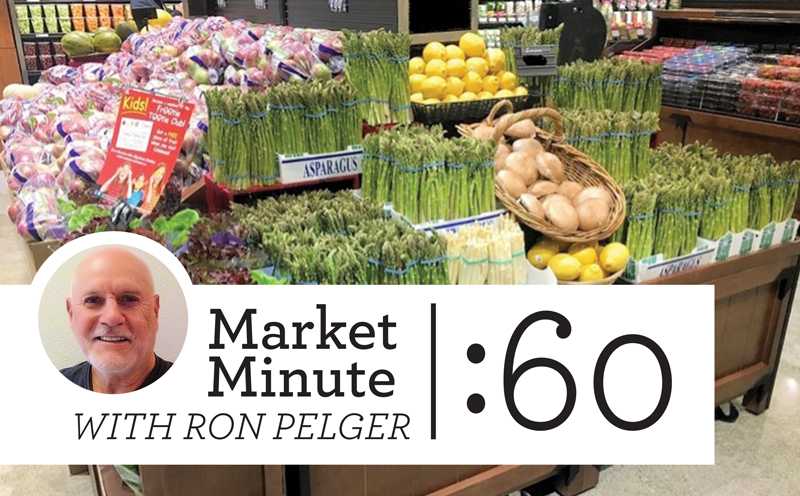
How retailers display their specialty fruits and vegetables plays a key role in the category’s success at retail.
In 1991, Bobby G. Beamer, former graduate research assistant and Warren P. Preston, assistant professor, both with the Department of Agricultural Economics, Virginia Polytechnic Institute and State University, issued a report titled “Shelf Space Allocation in the Produce Department: Implications for Marketing Specialty Produce.” Although it was researched and written over 20 years ago, the information they put forth has timeless value.
The report stated that fresh fruits and vegetables have attracted attention as potential alternative agricultural enterprises. The produce section also has grown in importance in the supermarket industry. As this level of importance has evolved, retail supermarkets have attempted to attract more business by expanding their produce lines. Large stores may stock as many as 900 SKUs, compared to 50-100 just a few decades ago.
Figuring out how to grow something that hasn’t been grown here before, especially healthy, home-country food that people want and really miss, is exciting. And it’s a challenge because some specialty items have been total failures. But then there is a successful item, which makes the effort worth it for growers, distributors, retailers and foodservice operators alike.
The locally grown movement is also helping to push the specialty category. Local growers have the ability to produce fragile products that don’t travel as well as some, and get them to restaurants and retailers and specialty grocers.
All that is specialty, healthy, fresh and local, however, is not without its challenges. Michael Muzyk, president of Baldor Specialty Foods in the Bronx, NY, agreed that the specialty fresh produce market is strongly connected to locally grown.
“Specialty starts with seasonal,” said Muzyk. “Wild ramps, fiddlehead ferns and even New Jersey tomatoes are good examples.”
But while it’s great to be able to offer these items to retailers and foodservice operators who want specialty, including ethnic items, companies like Baldor have one primary concern beyond specialty, freshness and sustainability, and that is food safety.
“We’re not willing to take a chance on product that comes from a farm that produces below our food-safety criteria,” said Muzyk. “And we’re talking about all products, regardless if they are imported or from a local grown. I don’t care where it’s produced, if it doesn’t fit Baldor’s criteria for food safety, it doesn’t come in our door. For local producers, we issue a criteria checklist that they must respond to. The bottom line is that they must prove that the food is safe or we don’t want it regardless of how popular or highly demanded it is.”
No doubt that growers who want a piece of the local pie are going to have to step up to base on food safety, traceability and even sustainability if they want their products to end up in fine restaurants and retail stores.