MAS Melons & Grapes concentrates on high Brix to serve Japanese market
MAS Melons & Grapes concentrates on high Brix to serve Japanese market
RIO RICO, AZ — Fruit sales in Japan are notorious for moving perfect fruit at outrageously high prices.
MAS Melons & Grapes LLC, located here, has met the challenge of selling honeydew to Japan. The process of meeting Japanese Brix requirements has opened other doors.
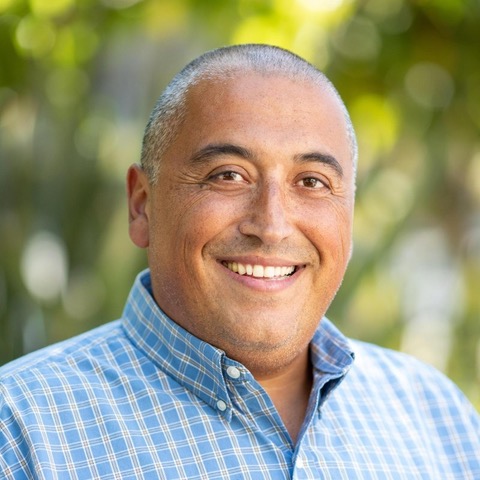
MAS is an acronym using the initials of the company’s 52 percent owner: Miguel Angel Suarez. In Spanish, the word “mas” means “more.” Suarez is best known by his nickname, “Miky.”
Suarez launched MAS with four Mexican grower-partners 17 years ago.
Suarez said 40 percent of his produce sales go to export markets. The largest of these markets is Japan. The Japanese have been MAS customers for 13 years.
 MAS Melons & Grapes’ headquarters in Rio Rico, AZ.“They are very knowledgeable about Mexican agriculture and the growing areas and the growers. That is very, very important,” said Suarez. “In Japan, everything is perfect. Whatever you see, the packaging is well done. They are respectful of everything and expect the same from the rest of the world. Japan’s food is 75 percent imported” and those expensive food imports are expected to be perfect.
Mostly, MAS exports directly to Japan via Mexico’s Pacific port, Manzanillo, which is directly west of Mexico City. Connections to Japan are particularly good because Chilean fruit is shipped to Manzanillo for redistribution to Japan. So, Mexican shippers can take advantage of the freight efficiency and be in the Land of the Rising Sun 18 days after picking. The fruit is at sea for 14 days.
To assure the right Brix levels for the Japanese market, MAS has installed light beam machines that can non-invasively read fruit sweetness levels in melons. These machines cost $500,000 each. Affiliated grower-packers in Caborca and Colima, Mexico, are armed with this equipment.
Caborca is in the Mexican north toward Nogales, AZ, so that fruit ships through Nogales, then Long Beach, CA. The Long Beach connection involves 12 or 13 days at sea.
The melon packers’ Brix scanners are set to read Brix levels 9.0 to 10.99, which is a taste range Suarez describes as good to a little better. The scanners also read 11.0 to 12.5 Brix, and then higher. Anything higher than 11 Brix “has a very good taste.” The scanners have a margin of error of 0.5 Brix, so they are set to error on the conservative side to unquestionably give the customer the expected value.
The honeydew are packed according to sweetness and then loaded aboard the ships. “We give all the information to Japan.” Sometimes fruit is sold as it is already aboard the ship and on its way to Japan.
Suarez said he has extended this Brix grading option to the Loblaw’s chain in Canada. The program “has been very good” for the chain.
“There is enough of a price bonus that even with the extra cost, this is good business. If you translate the cost to cents at the retail level, it’s not that big of a deal,” Suarez noted. “If at the end, the customer doesn’t like it, it’s not good for us. If it’s good tasting, they come back.”
There are domestic U.S. markets and English buyers that are satisfied with the fruit that doesn’t reach the Japanese standard for sweetness.
Beyond honeydew, the company sells large volumes of grapes and watermelons. Suarez said Costco has been a strong grape customer for many years. MAS’s primary markets are Philadelphia, Chicago and Los Angeles.
Via Long Beach, the firm exports grapes to Japan, New Zealand, Malaysia, Hong Kong and Thailand.
Beyond honeydew, Suarez is beginning to ship Mexican broccoli, celery and perhaps avocados to Japan, shipping out of Manzanillo.
In Rio Rico, MAS has modern offices and cold storage space to hold as many as 67 trailerloads of produce.