Jonathan’s Sprouts a little piece of heavenly farming on earth
Jonathan’s Sprouts a little piece of heavenly farming on earth
Barbara and Bob Sanderson began Jonathan’s Sprouts Inc. in Rochester, MA, in March 1976. Since then the company has built its reputation through continued personal contact with its customers, standing steadfastly behind its quality products and offering support and education.
Liz Reilley, director of marketing and sales, said the company grows only organically, and added, “Bob and Barbara are credited in New England with helping to create organic departments within produce departments over the years.
“Star Markets is one example,” Reilley continued. “We also sold to Bread & Circus, which was ultimately bought by and became part of Whole Foods. Today our clients are spread across the nation in stores such as Trader Joe’s, which receives our products in every one of its distribution centers.”
Jonathan’s Sprouts’ primary customer range is along the East Coast, and it has New England pretty much wrapped up as far as competition is concerned. Reilley said that the company is increasingly marketing into the Southeast.
The company’s core products are sprouts, the most popular being mung bean, alfalfa, radish and pea sprouts.
“We also produce microgreens such as pea shoots, sunflowers and wheat grass,” Reilley explained. “Microgreens are more perishable than sprouts and they have a shorter shelf life, so they work well for foodservice operations. They’re in high demand by restaurants because they are extremely trendy today.”
Jonathan’s Sprouts is also highly regarded for its well-known extensive food-safety program. Reilley pointed out that sprout seeds can be grown in fields where animals are nearby, and so extra caution is used to ensure that every package of sprouts produced by the company has undergone the most extreme testing possible.
“First we test every batch of seed that arrives at our facility, and that means taking samples from every single bag,” she explained. “Every bag is carefully checked and any bag that is damaged in any way is rejected.”
Using a tool called a trier, sample seed is taken from every bag, and the holes made by the trier are covered with an identifying label. The bags of seed are stored separately until it is time to sprout them in warm water.
Following 48 hours of growing, the runoff water from the sprouts is sampled for testing.
“The samples are identified and packaged for the lab and after another 48 hours tests come back from the lab; negative for pathogens,” said Reilley. “Meanwhile, sprouts are grown from these seeds and tested for quality, flavor, crispness and shelf life. These seeds are now safe to use in production, and we are assured they will give us the quality we expect.”
But there is still more testing and triple testing. Every day, every crop grown from the twice-tested seeds is sampled in a similar way.
“Every batch of sprouts grown from these seeds will have water sampled from every growing unit,” said Reilley. “These are sent to the lab where duplicate samples of each batch are tested to confirm that the sprouts are safe. No sprouts are sent to market until the negative confirmation comes back from the lab.”
According to Reilley, the Sandersons truly believe that any pathogen outbreak related to or believed to have been associated with sprouts in the past could have been easily avoided and/or resolved as not having been the source of the problem if just a couple of basic tests had been conducted.
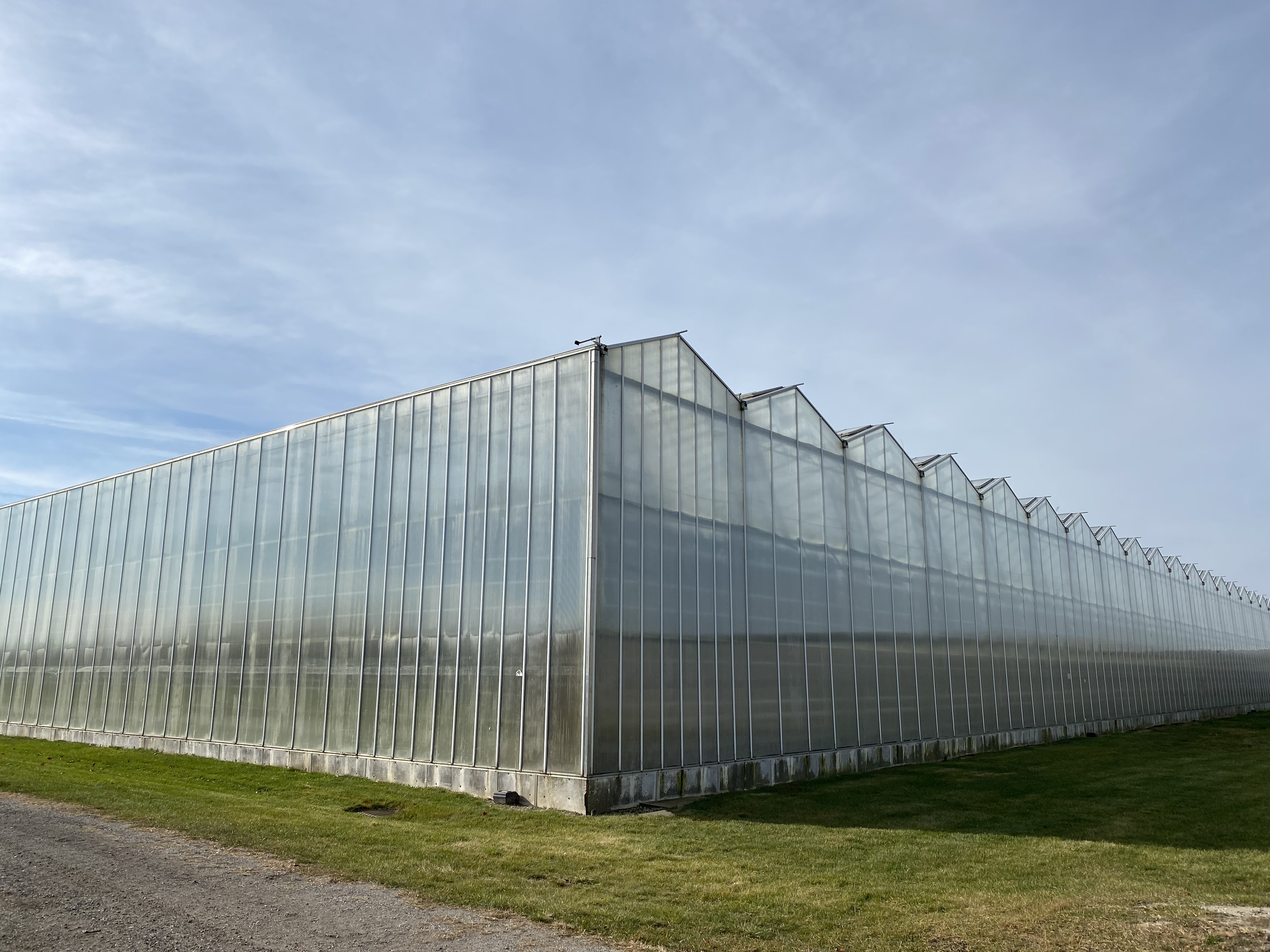
Jonathan’s Sprouts’ farm is more like a little piece of heavenly gardening on earth. While sprouts are growing to fill customers’ orders, the couple works tirelessly with chefs and other herb growers. They have formed tight bonds that help them to collaborate to get the good word out about the outstanding nutritional benefits and delicious uses of organic sprouts and herbs.