Double Tree Castle expanding offerings
Double Tree Castle expanding offerings
RIO RICO, AZ— Agronomist Hector Castillo was already growing hot peppers in Mexico when in 2000 he partnered with his brother, Carlo, to create the Nogales distributing company Double Tree Castle Inc.
Double Tree is a reference to the two brothers. Castle is the English interpretation of Castillo.
Hector Castillo is still a grower, but now Double Tree Castle has a core group of growers in Sonora, Sinaloa, Chihuahua, Coahuila and Baja. The firm is a 12-month pepper supplier.
 In the Rio Rico warehouse of Double Tree Castle Inc. are German Cabello, COO, with President Carlo Castillo and Juan Pedro Camou. Camou is the comptroller of Casco Produce, the Hermosillo-based parent company of Double Tree.While the firm initially focused on selling peppers — particularly Cayenne and Anaheim — to processors, fresh sales are increasingly part of the business. “It’s best for the growers to be in both markets,” according to Carlo Castillo, company president.
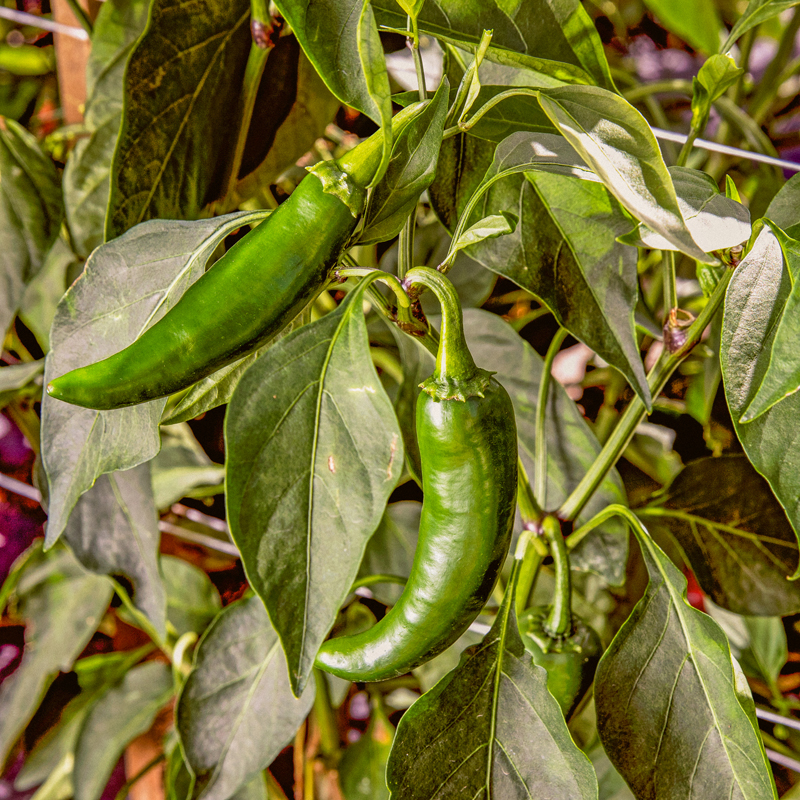
German Cabello, Double Tree’s chief operations officer and fresh sales director, indicated that he was very busy with jalapeño sales in the days leading into the Super Bowl. He said his jalapeños are a significant part of the processed product that is part of Super Bowl party fare each year. He added that Cinco de Mayo is the other large holiday for Double Tree Castle.
An extension to other vegetables is a new dynamic as well, as in late January Double Tree began selling carrots produced in Torreon. Additionally, the firm had just met with an Imperial Valley grower to begin selling California-grown peppers, beginning in May or June 2019.
Pepper varieties shipped by Double Tree are hot and no-heat jalapeños, mild and hot yellow and red banana, Serrano, Anaheim and green Bells. “We consider tomatillos in the pepper family,” said German Cabello. Tomatillos are sold to the fresh and processing markets.
The firm ships the Casco Produce brand.
German Castillo said that the jalapeño pepper prices to the grower had been about $1 a pound for weeks. This is three times the average price but cold weather reduced supplies.
“Since the summer, we’ve had rain and hurricanes,” he said. “I’m glad our good growers did a good job to recover the plants.” Cold weather has also reduced production.
While a very high price to the grower is good news, Castillo noted, “We would rather have more boxes at a lower price. That amounts to more money in the long term.”
The firm is also working for organic certifications with its growers.