Carzalia completes 90,000-square-foot expansion
Carzalia completes 90,000-square-foot expansion
Carzalia Valley Produce in Columbus, NM, recently finished the final stage of its massive extension and renovation project.
"It is a 90,000-square-foot onion shed with six truck-loading docks for pumpkins, onions and watermelons," said Chaddy Robinson, public relations and marketing representative for Carzalia Valley Produce Inc. "The structure is the size of two football fields. Carzalia is on a very positive path currently. We are being very aggressive and proactive in our use of technological advances, especially as they apply to improving labor issues and reducing overhead costs, but at the same time maintaining our consistently high quality and service."
The huge facility enables Carzalia to store onions in micro plastic bins inside the warehouse rather than leaving them in the fields to dry. When left outdoors, rain and other weather elements can affect the product. The bins are designed to allow air to flow through them to enable the onions to dry properly.
Carzalia is a family-owned farming company that grows onions, watermelons, pumpkins, chili peppers and other items. It was founded in 1918, and is currently operated by the fifth generation of family members. The farming operation runs along the U.S.-Mexican border in the southwest corner of the state. Ms. Robinson said that it is a desert area with no encroachment of any kind - other than jackrabbits and coyotes.
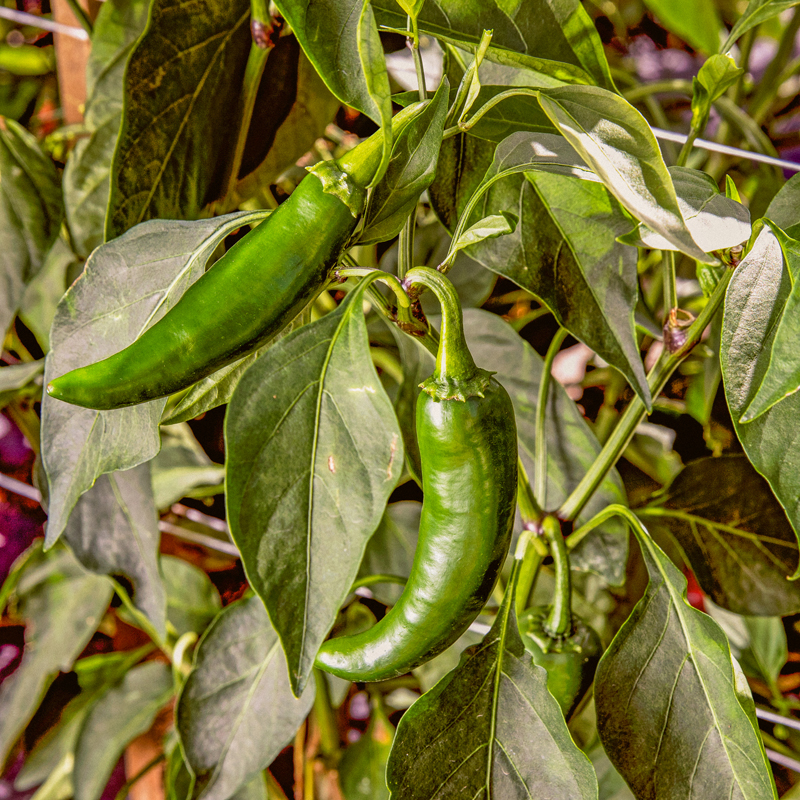
Ms. Robinson said that the company's green and red chili pepper category is continuing to grow. "They are good for you; they add great flavor to foods," she said. "They are a great substitute for salt and much healthier. Chili peppers have high amounts of antioxidants, which is something everyone seems to be aware of today. Our chili season runs from July through November."
A red chili pepper is simply a mature green. Growers continue to produce the green peppers until they become stressed. But there is little or no waste in this crop. Red chili coloring is used in hot dogs, nail polish, cosmetics and just about every other product that that needs red coloring.
"Onions start around the first of June and run through the end of September," said Ms. Robinson. "We grow the Carzalia sweet onion and reds, whites and yellows. The Carzalia is unique to our company and one of the sweetest on the market. This year it is testing in the low three and high two range [on the pyruvic acid scale]. Only onions that grade four or lower can be called sweet onions, so ours is obviously one of sweetest on the market -- even sweeter than Vidalias."
Carzalia grows only the seedless Millionaire watermelon variety. Ms. Robinson said that the PLU stickers used on the melons have both the company's web site and mailing addresses.
"Customers send us notes continually about how wonderful our watermelons are and how much they enjoy them," said Ms. Robinson.
Pumpkins start around Oct. 1 for the company. Ms. Robinson said that the crop is growing phenomenally because it is getting some unexpected -- and uncommon -- rainfall.
"We are here in the middle of the desert, so they aren't used to all this moisture. But they are certainly celebrating it by plumping up almost right before your eyes. We expect it to be a bumper crop this year."
The company grows the Merlin and the Magic Lantern varieties, which are both used as jack-o-lanterns. Carzalia packs a typical 40-count bin.
Ms. Robinson said that consumers no longer want huge pumpkins such as were popular in years past, but rather prefer basketball-size products. She attributed this trend to people living in smaller homes and apartments, the ease in transporting them from the retailer to their homes and the fact that smaller pumpkins are easier to carve.
"We can control the size by choosing the right variety to plant," she said. "The seeds have been cultivated especially for size and for pumpkins that hold up over a long period of time after being carved. That's the perfect combination for a winning jack-o-lantern pumpkin."
Ms. Robinson said that the company is currently exploring the potential of moving some pumpkins into the Mexican market.
"Our neighbors to the south are adopting Halloween almost as much as Americans do today," she said. "High-end growers are decorating their produce departments, and they are looking for quality decorative pumpkins. We have a Spanish translation link on our web site to help buyers from the Latin regions learn about our products and services. It is an added benefit that we are just across the border."
Carzalia farms on about 3,000 acres, of which over 300 acres are in pumpkins. The majority of its fresh product goes to retail distribution centers, but some chili peppers go to processors. Broker-partners handle sales for the company.
"It is a 90,000-square-foot onion shed with six truck-loading docks for pumpkins, onions and watermelons," said Chaddy Robinson, public relations and marketing representative for Carzalia Valley Produce Inc. "The structure is the size of two football fields. Carzalia is on a very positive path currently. We are being very aggressive and proactive in our use of technological advances, especially as they apply to improving labor issues and reducing overhead costs, but at the same time maintaining our consistently high quality and service."
The huge facility enables Carzalia to store onions in micro plastic bins inside the warehouse rather than leaving them in the fields to dry. When left outdoors, rain and other weather elements can affect the product. The bins are designed to allow air to flow through them to enable the onions to dry properly.
Carzalia is a family-owned farming company that grows onions, watermelons, pumpkins, chili peppers and other items. It was founded in 1918, and is currently operated by the fifth generation of family members. The farming operation runs along the U.S.-Mexican border in the southwest corner of the state. Ms. Robinson said that it is a desert area with no encroachment of any kind - other than jackrabbits and coyotes.
Ms. Robinson said that the company's green and red chili pepper category is continuing to grow. "They are good for you; they add great flavor to foods," she said. "They are a great substitute for salt and much healthier. Chili peppers have high amounts of antioxidants, which is something everyone seems to be aware of today. Our chili season runs from July through November."
A red chili pepper is simply a mature green. Growers continue to produce the green peppers until they become stressed. But there is little or no waste in this crop. Red chili coloring is used in hot dogs, nail polish, cosmetics and just about every other product that that needs red coloring.
"Onions start around the first of June and run through the end of September," said Ms. Robinson. "We grow the Carzalia sweet onion and reds, whites and yellows. The Carzalia is unique to our company and one of the sweetest on the market. This year it is testing in the low three and high two range [on the pyruvic acid scale]. Only onions that grade four or lower can be called sweet onions, so ours is obviously one of sweetest on the market -- even sweeter than Vidalias."
Carzalia grows only the seedless Millionaire watermelon variety. Ms. Robinson said that the PLU stickers used on the melons have both the company's web site and mailing addresses.
"Customers send us notes continually about how wonderful our watermelons are and how much they enjoy them," said Ms. Robinson.
Pumpkins start around Oct. 1 for the company. Ms. Robinson said that the crop is growing phenomenally because it is getting some unexpected -- and uncommon -- rainfall.
"We are here in the middle of the desert, so they aren't used to all this moisture. But they are certainly celebrating it by plumping up almost right before your eyes. We expect it to be a bumper crop this year."
The company grows the Merlin and the Magic Lantern varieties, which are both used as jack-o-lanterns. Carzalia packs a typical 40-count bin.
Ms. Robinson said that consumers no longer want huge pumpkins such as were popular in years past, but rather prefer basketball-size products. She attributed this trend to people living in smaller homes and apartments, the ease in transporting them from the retailer to their homes and the fact that smaller pumpkins are easier to carve.
"We can control the size by choosing the right variety to plant," she said. "The seeds have been cultivated especially for size and for pumpkins that hold up over a long period of time after being carved. That's the perfect combination for a winning jack-o-lantern pumpkin."
Ms. Robinson said that the company is currently exploring the potential of moving some pumpkins into the Mexican market.
"Our neighbors to the south are adopting Halloween almost as much as Americans do today," she said. "High-end growers are decorating their produce departments, and they are looking for quality decorative pumpkins. We have a Spanish translation link on our web site to help buyers from the Latin regions learn about our products and services. It is an added benefit that we are just across the border."
Carzalia farms on about 3,000 acres, of which over 300 acres are in pumpkins. The majority of its fresh product goes to retail distribution centers, but some chili peppers go to processors. Broker-partners handle sales for the company.